Womens Health Products: What to Check Before You Buy
Learn how to judge womens health products before you buy: categories, regulation, claim wording, dose limits and medication checks in plain language.
Women's-health companies attracted only about 2% of venture funding allocated to the healthcare industry, according to Deloitte's analysis of PitchBook data. That imbalance helps explain why greater attention to women's health is welcome. It doesn't mean every new product deserves a place in your routine.
For shoppers, the most useful question is simpler than the marketing: What does this label let me verify? A pregnancy test, a prescription and a botanical gummy can all sit under the women's health umbrella, but they don't come with the same evidence, oversight or safety checks.
What Counts as a Women's Health Product
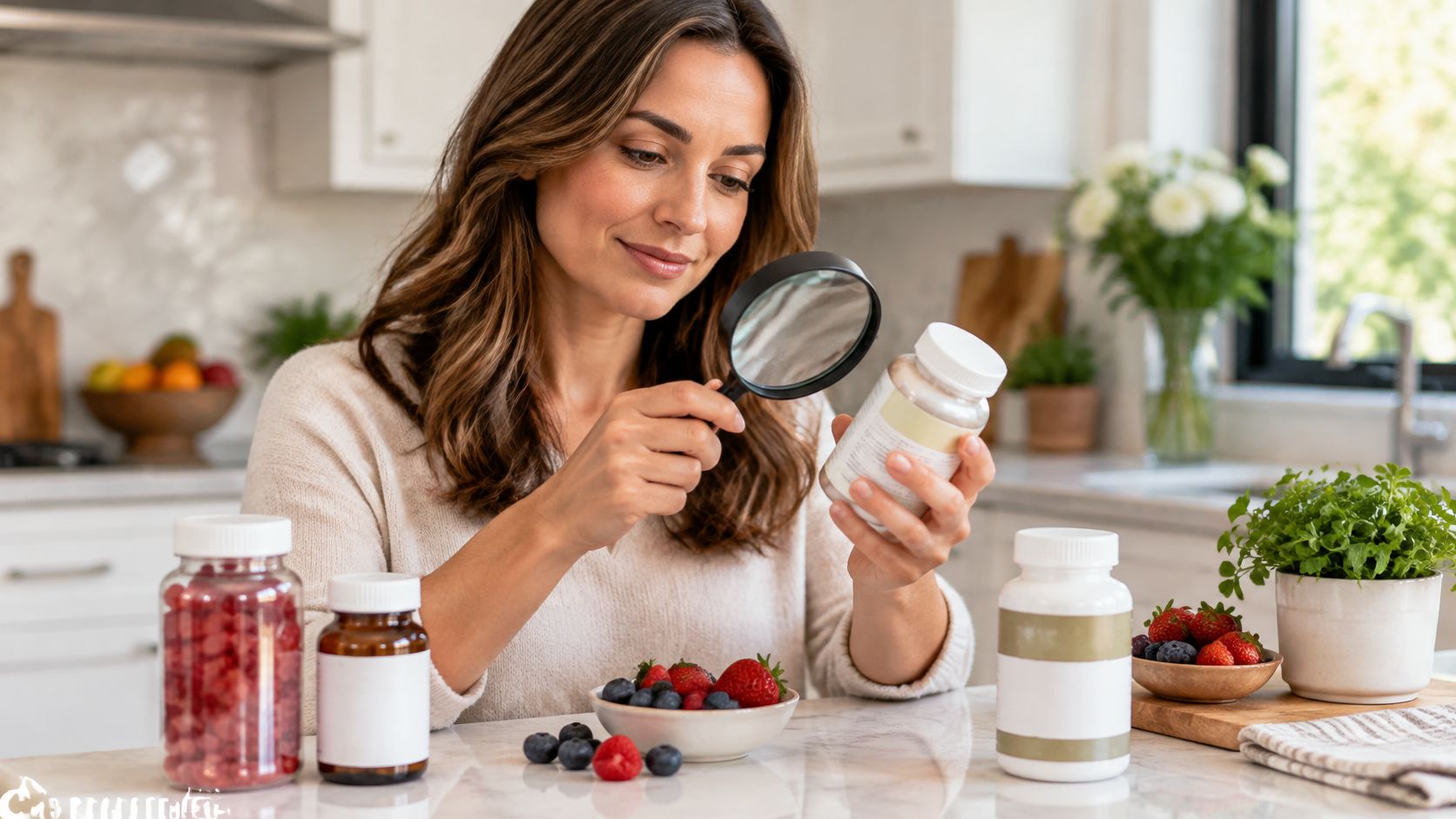
A shopper's cart holds a pregnancy test, a menstrual cup, a menopause moisturizer and a daily botanical gummy. They're all women's health products, yet their purposes have little in common. Why does the same label cover such different purchases?
The term has a women-specific meaning and a broader health meaning. Women-specific products address menstruation, fertility, pregnancy, menopause and gynecological needs. The broader category includes products for conditions that affect women differently or disproportionately, including osteoporosis, some autoimmune conditions and differences in heart disease presentation.
A category, not a quality seal
The SVB Innovation in Women's Health report distinguishes core women's health from conditions that affect women differently or disproportionately. That distinction matters because a narrow definition leaves out relevant care, while a broad definition can make very different products appear interchangeable.
On a shelf, the practical distinctions are:
- What it does: Absorbs menstrual flow, detects a hormone, supplies a nutrient or addresses a symptom.
- What it is: A drug, medical device, cosmetic or dietary supplement.
- What you can verify: Instructions, ingredient amounts, warnings and evidence appropriate to that category.
A supplement marketed for feminine well-being isn't a substitute for a diagnostic test or treatment. Likewise, a moisturizer and hormone therapy shouldn't be judged by the same label checklist.
Start by sorting the product into a category before interpreting its promises.
Product Categories at a Glance
| Category | Typical examples | Main intended use | US regulatory route | What to check on the label |
|---|---|---|---|---|
| Menstrual care | Pads, tampons, menstrual cups, period underwear | Manage menstrual flow | Tampons and cups are medical devices; other items have product-specific requirements | Absorbency where applicable, materials, sizing and wear instructions |
| Pregnancy and ovulation tests | Home pregnancy tests, ovulation strips | Detect hCG or the LH surge | Medical devices subject to FDA requirements | Sensitivity claim, expiry date and testing instructions |
| Prenatal supplements | Folate and iron multivitamins, DHA capsules | Fill nutrient gaps during pregnancy | Dietary supplements | Folic acid and iron per serving, chemical forms and total daily intake |
| Contraception | Pills, patches, rings, condoms | Prevent pregnancy | Drugs or medical devices, with product-specific approval or clearance routes | Use instructions, effectiveness information and interaction warnings |
| Menopause care | Prescription hormone therapy, vaginal moisturizers, lubricants | Address hot flashes, dryness or discomfort | Prescription drugs; moisturizers and lubricants follow device or cosmetic rules according to intended use | Prescriber guidance, ingredients and exact claim wording |
| Intimate hygiene | Washes, wipes, pH-balanced cleansers | Clean the external area | Usually cosmetics when limited to cleansing claims; most lack premarket approval | External-use directions, fragrance and irritant ingredients |
| Wellness supplements | Botanical gummies, vitamin capsules, herbal blends | General support such as energy or mood | Dietary supplements | Supplement Facts, individual amounts and evidence matching the product |
The regulatory route tells you what kind of scrutiny to expect, not whether you personally need the product. The last column identifies the first useful check. For a menstrual cup, fit and use instructions matter immediately; for a supplement, an attractive ingredient list is incomplete without amounts.
Don't treat every example within a row as identical. A prescription menopause treatment has a different purpose and review process from a nonprescription moisturizer. A product intended for internal use also requires different attention from a wash labeled for external skin.
When a product changes lanes
Intended use and claims matter as much as appearance. A familiar nutrient can appear in a supplement, a cosmetic or a drug. Its presence alone doesn't establish the product's regulatory category.
A prenatal multivitamin marketed to supplement dietary intake belongs in the supplement category. If its seller claims it treats a medical deficiency, that claim raises a different regulatory question. It doesn't automatically turn the bottle into an approved medicine.
Similarly, a menopause moisturizer or lubricant may follow device or cosmetic requirements according to its intended purpose and claims. Don't assume that everything sold beside cosmetics is itself a cosmetic.
Shelf test: If a product claims to diagnose, treat, cure or prevent a condition, check its drug or device status rather than trusting its packaging style.
Start with your category row, then read the final column before considering flavor, branding or promotional bundles. If you can't identify the intended use, put the purchase on hold until the seller clarifies it.
Who Regulates Each Product and Why It Matters
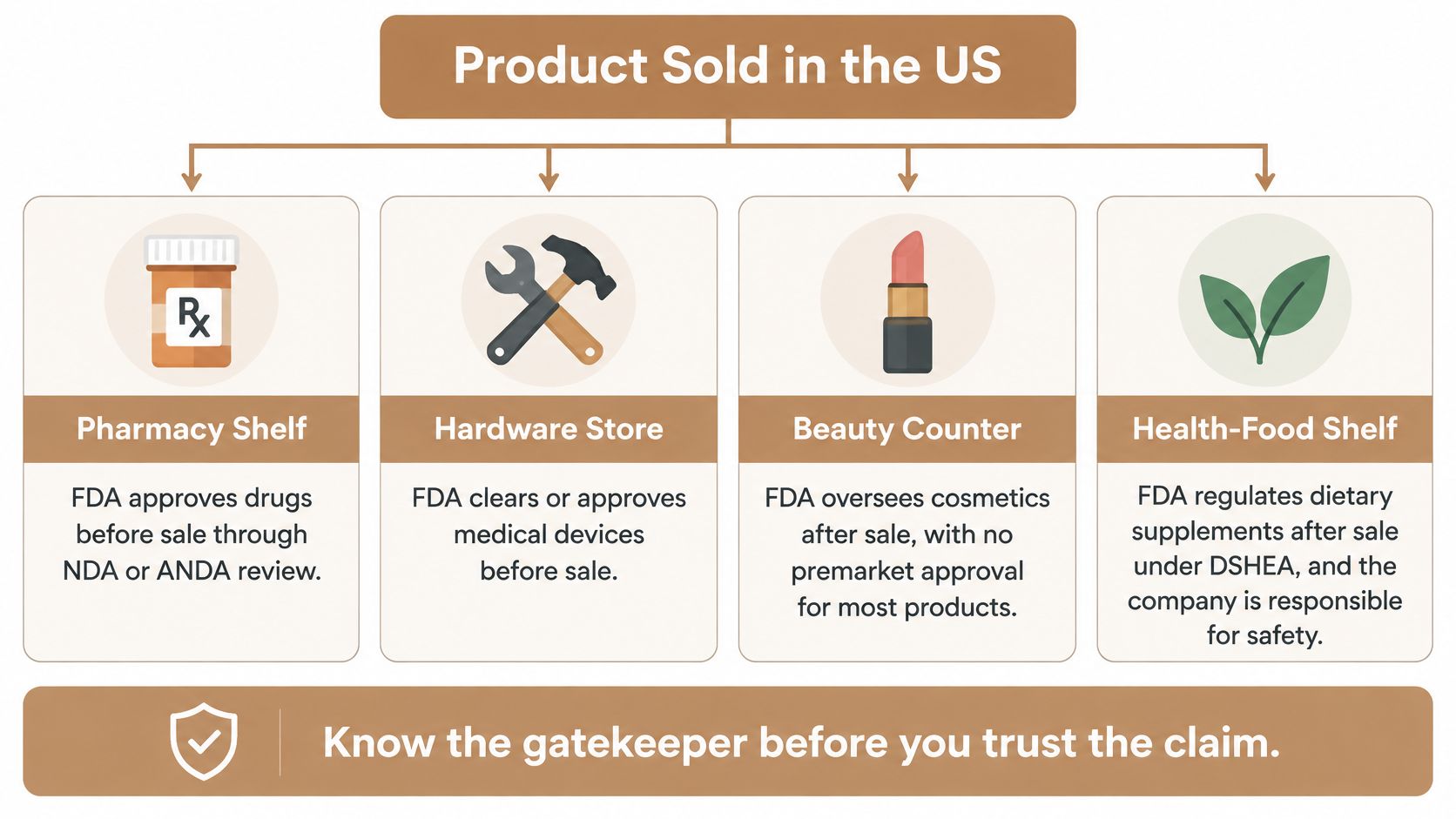
Think of a pharmacy shelf, a hardware store, a beauty counter and a health-food shelf. Each suggests a different kind of product, with different checks before or after sale. In the United States, the FDA oversees drugs, medical devices, cosmetics and dietary supplements, but FDA oversight doesn't mean FDA approval.
The diagram separates those routes visually.
Different routes to the shelf
Prescription drugs undergo premarket review for safety and effectiveness for their intended use. Medical devices follow requirements based on their classification and risk, which can include clearance or approval; not every device follows the same process.
For most cosmetics, there's no FDA premarket approval of the finished product. Manufacturers remain responsible for safety and lawful labeling. A cleansing claim therefore shouldn't be mistaken for evidence that a wash treats an infection.
Dietary supplements are regulated as food rather than drugs. As Stanford Medicine's supplement guidance explains, regulators generally don't verify their safety, effectiveness or contents before sale.
A polished gummy package hasn't been evaluated in the same way as a prescription medicine. Words such as botanical or daily wellness don't change that distinction.
Questions that reveal the route
Before accepting an approval-related statement, ask:
- Who is responsible? Identify the manufacturer or distributor and a usable contact route.
- What exactly was approved or cleared? Separate the finished product from a facility, ingredient or manufacturing claim.
- Does the claim name a disease? A supplement promising treatment deserves a different response from one describing nutritional support.
A manufacturing credential can provide useful information about production practices, but it doesn't establish that a mood or intimacy claim is effective. Likewise, registration language shouldn't be read as a clinical endorsement.
The regulatory route establishes the legal requirements. It doesn't rank every product's quality or suitability for you.
How to Check Claims, Ingredients and Evidence
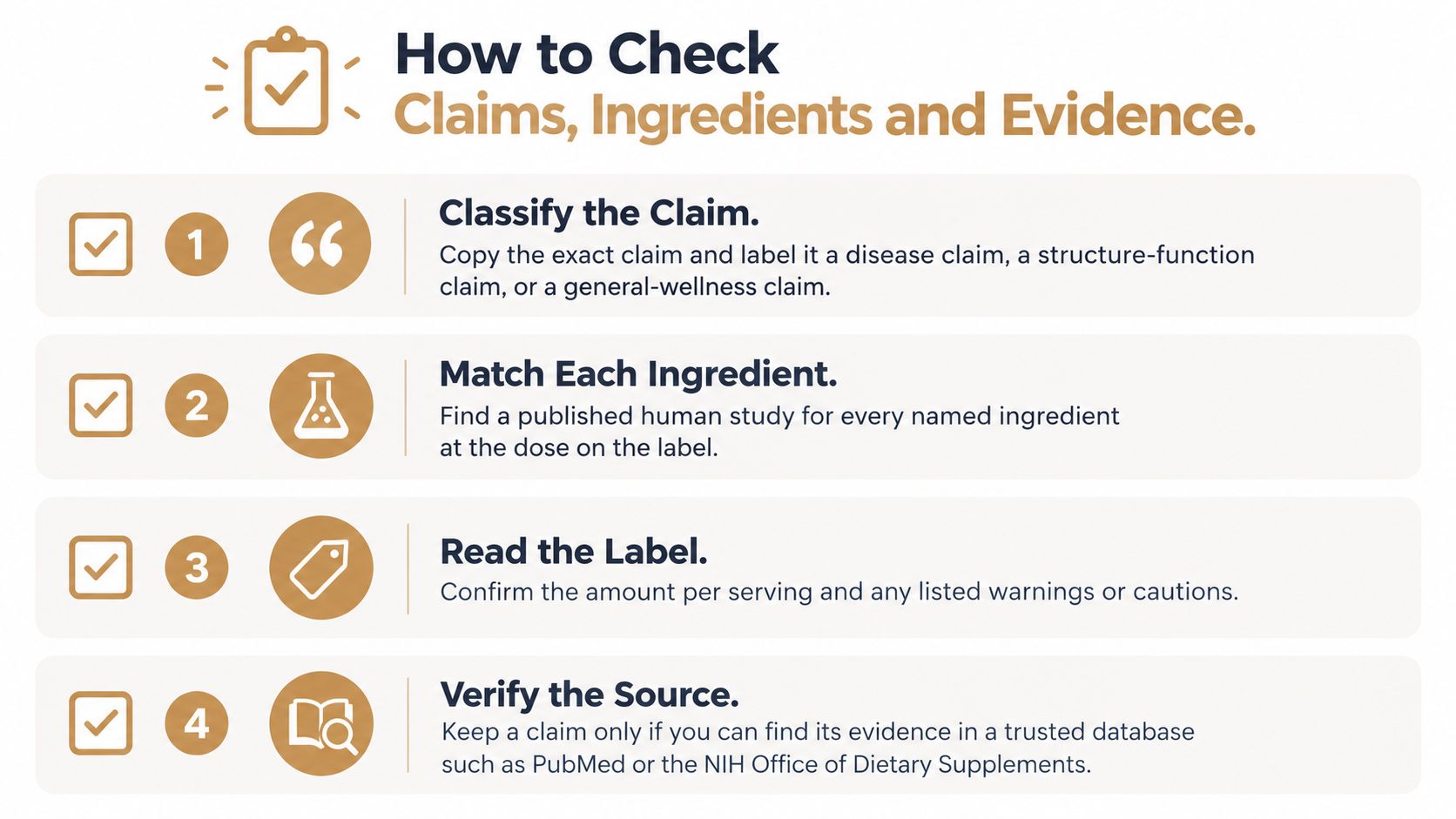
Read a supplement label as a set of statements to check, not as a single promise. The NIH Office of Dietary Supplements explains that evidence is established for some supplement uses, while other proposed benefits need further study. Your task is to determine whether the evidence fits the product.
- Copy the exact claim. Classify it as a disease claim, a structure/function claim or a general-wellness claim. Supporting normal function isn't the same as treating a disorder.
- Match ingredients to amounts. Find the quantity of every active ingredient per serving. A proprietary blend's combined weight doesn't disclose its individual doses.
- Compare the study with the label. Check ingredient form, dose, population and duration. Research in a different group or using a different extract may not substantiate the advertised benefit.
- Identify the botanical preparation. Look for the plant part, extract ratio and standardization, including the marker compound used to describe consistency.
- Request quality documentation. Useful records include batch identity testing, microbial and heavy-metal testing, and stability information supporting the shelf life.
- Read the use limits. Check warnings, contraindications and duration guidance. If no maximum duration is stated, ask what supports ongoing use rather than assuming indefinite use is established.
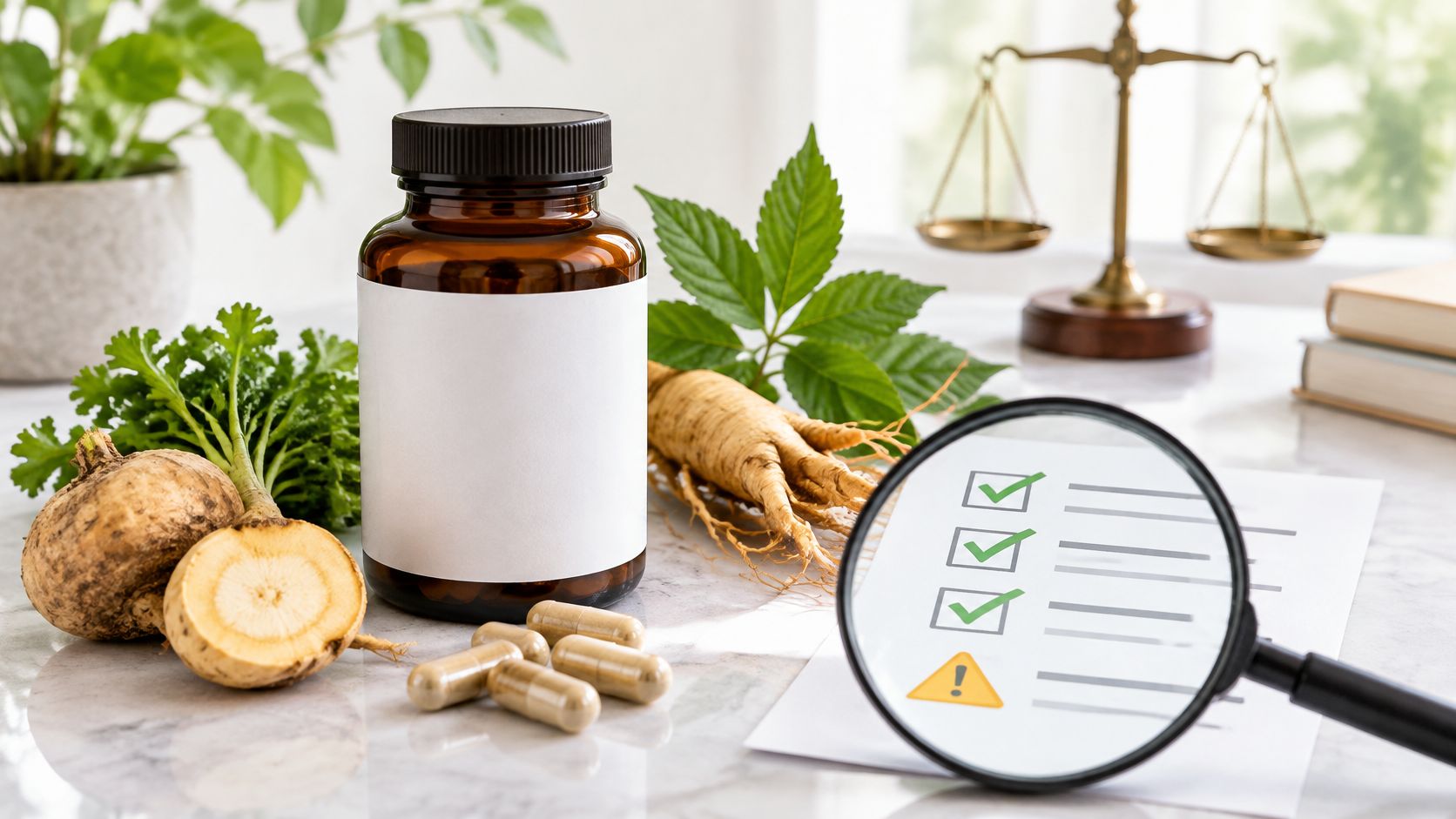
Use this visual checklist as a reminder while comparing the package with the seller's evidence.
What common claims actually tell you
| Claim wording | What it can mean | What to verify |
|---|---|---|
| Treats, cures or prevents a condition | A disease-treatment claim, not appropriate for a dietary supplement | Treat as a red flag; seek an appropriately authorized product or clinician |
| Supports mood, energy or confidence | General-wellness or structure/function wording that still needs substantiation | Relevant product evidence and a supported time frame |
| Clinically studied ingredient | Research exists on an ingredient, not necessarily the finished gummy | Same form, dose, population and duration |
| Botanical or natural | Describes origin | Amount, standardization and contaminant testing |
| No harsh chemicals | Vague marketing language | Named excluded substances and testing scope |
| Third-party tested | An outside organization performed some verification | Laboratory identity, tests performed and batch certificate |
Clinically studied doesn't mean clinically proven for this gummy. An ingredient study may be relevant, but the seller should explain the connection rather than expecting you to infer it.
Mood, confidence and intimacy also involve sleep, stress, relationships and hormonal factors. Don't accept a fixed result or deadline without matching evidence.
For a detailed assessment, request an evidence matrix listing ingredient identity, standardized composition, daily dose, studied population, measured outcome, trial duration, comparator and adverse-event findings. That makes gaps visible without requiring you to interpret promotional language.
Reading Doses and Total Daily Intake
A gummy may not be your only source of a nutrient. A multivitamin, prenatal product, fortified cereal, or sports drink can add to the same daily total. Check the combined amount, not just the number on one bottle.
The NIH Office of Dietary Supplements' safety guidance explains that many vitamins and minerals have a tolerable upper intake level, or UL. A UL is the highest daily intake unlikely to pose a risk for the general population. It is a safety boundary, not a target or a recommended dose.
Use the correct upper-limit reference
The relevant limit can depend on age, nutrient form, and which sources count toward it. The table gives adult ULs for commonly overlapping nutrients. These figures are from the NIH Office of Dietary Supplements. For vitamin A, the limit applies to preformed vitamin A, not beta-carotene. For niacin, it applies to supplemental and fortified sources, not naturally occurring niacin in food.
| Nutrient | Adult UL per day | Common overlapping sources |
|---|---|---|
| Vitamin A, preformed | 3,000 mcg RAE | Multivitamins, fortified foods, liver |
| Niacin | 35 mg from supplemental and fortified sources | Fortified cereals, B-complex products, energy blends |
| Vitamin B6 | 100 mg | Multivitamins, prenatal products, fortified bars |
| Iron | 45 mg | Prenatal and women's multivitamins, fortified foods |
| Zinc | 40 mg | Immune and multivitamin gummies, fortified foods |
| Vitamin K | No established numerical UL | Multivitamins and greens powders; relevant with blood thinners |
Use a simple tally to compare your daily intake with the appropriate limit:
- Copy the amount and unit: Record the quantity, not just the percentage Daily Value.
- Check the serving instructions: Separate the amount per gummy from the amount per full serving.
- Add overlapping sources: Include other supplements and relevant fortified foods or drinks.
- Check the form: Ask a pharmacist about unclear forms or units that do not match.
- Use the right benchmark: Age and life stage matter. Ask a healthcare professional for pregnancy or breastfeeding guidance.
A UL does not replace individual medical advice. Do not stop prescribed supplementation because a tally looks high. Bring it to your prescriber so they can interpret it in light of your treatment.
Botanical weights need context
An herb's weight alone does not show how concentrated or chemically consistent it is. Root powder, a concentrated extract, and a standardized extract can differ even when they come from the same plant.
Check whether the label identifies the extract ratio and marker-compound concentration. When no established UL is available for a botanical, that missing number does not mean a higher dose is appropriate.
More concentrated isn't automatically more suitable. The preparation, dose, and place in your overall routine all matter.
When comparing high-potency gummies, make your daily tally first. Potency describes an amount or concentration; the label still needs to show how that dose fits with your other sources.
Medications, Contraception and Stacking Checks
A wellness recommendation is incomplete if it never asks what prescriptions you take. The Federal Trade Commission's consumer guidance advises asking whether a supplement works, what side effects it has, how it interacts with medicines and what amount is appropriate.
Use a medication review as a purchasing step, not a response to a problem.
St. John's wort is an important example because it can interact dangerously with antidepressants and can compromise oral contraceptive effectiveness. Vitamin K can reduce the effectiveness of certain blood thinners. Neither issue can be resolved by deciding that a product feels gentle or comes from a plant.
Botanical identification also matters. The same plant name can describe different plant parts or preparations, so a pharmacist needs the actual label rather than a description such as herbal mood gummy.
Match the review to your medicines
Bring a medication list that includes prescriptions, nonprescription products, occasional medicines and other supplements. Then identify the relevant questions:
- Hormonal contraception: Could any ingredient affect contraceptive effectiveness? Ask about your specific method rather than assuming every method has the same interaction profile.
- Antidepressants: Have mood-related botanicals reviewed before combining them with treatment. Don't replace or stop a prescription to try a gummy.
- Anticoagulants: Ask about ingredients that may affect the medicine or bleeding risk, especially when starting or stopping a supplement.
- Thyroid medicines: Have minerals and dosing times reviewed. A pharmacist can establish an appropriate schedule where separation is needed.
- Diabetes medicines: Ask whether the complete formula warrants extra monitoring or changes to your existing plan.
- Fertility treatment: Obtain the treating team's approval before adding a wellness formula.
- Pregnancy and breastfeeding: Request ingredient-by-ingredient review rather than relying on a general adult-use statement.
Timing isn't a universal solution
Taking a supplement at breakfast and a medicine at bedtime doesn't automatically make the combination safe. Some problems involve absorption, while others can't be avoided just by separating doses.
If you're considering serotonin and mood-support supplements, share the exact product with the clinician managing your mental-health medicines. Marketing terms don't reveal how the ingredients will interact with your treatment.
Use the following consumer resource to prepare questions for that conversation.
Bring photos of the front label, Supplement Facts, directions and warnings to the pharmacy before the first dose. If an ingredient amount is hidden, say so explicitly. A reviewer can identify some risks from ingredient names, but missing quantities can prevent a complete assessment.
Judging a Daily Botanical Gummy
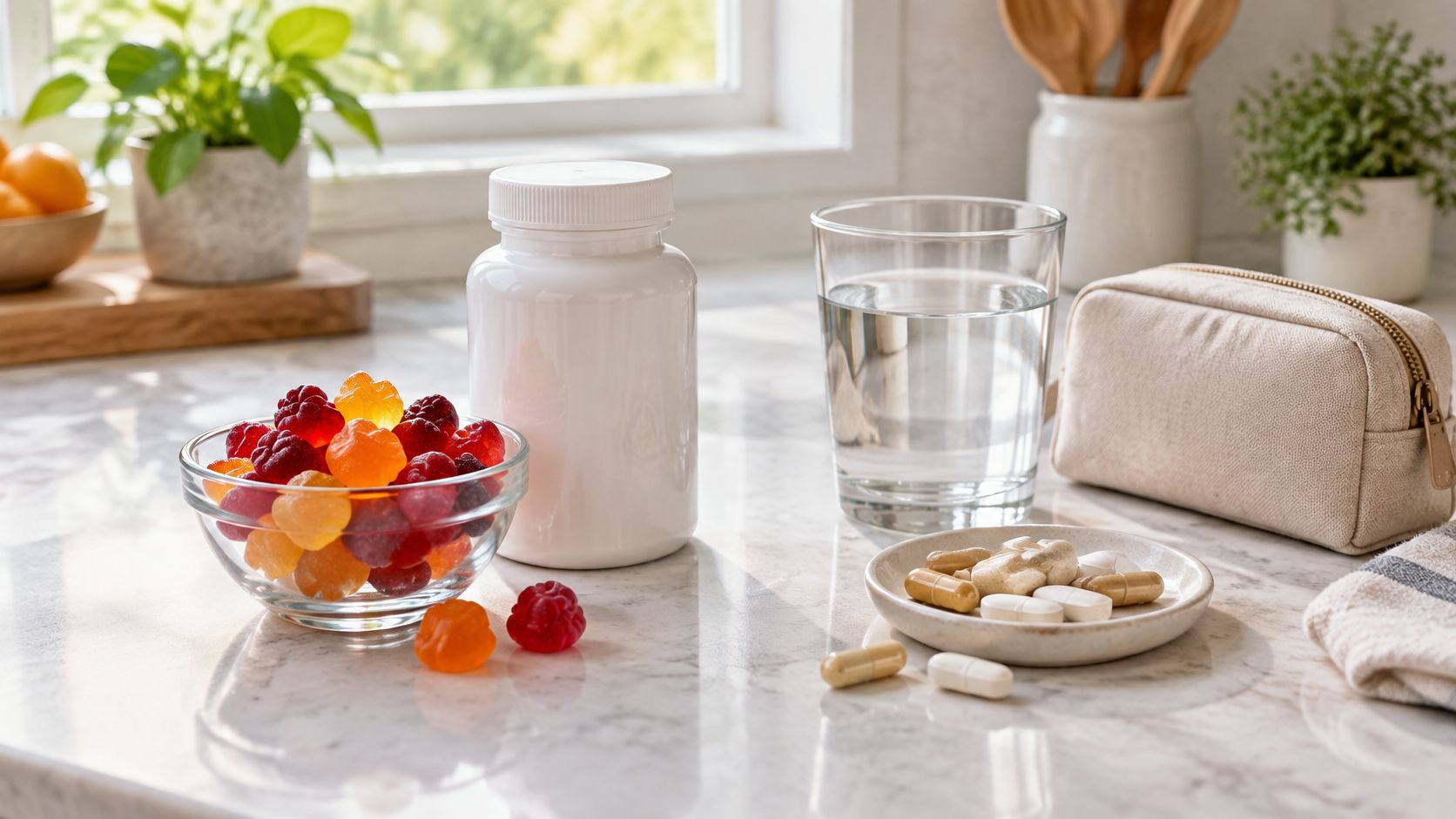
Say you're holding a hypothetical daily women's vitality gummy. Its label lists a proprietary botanical blend, promises confidence and mood support, mentions clinically studied ingredients without a citation, and describes the formula as natural with no harsh chemicals. It carries an adult-use note but no pregnancy or medication warning.
Nothing in this scenario establishes whether the product works. Walk through what the label really permits you to judge.
The label assessment
| Check | Result | Reason |
|---|---|---|
| Claim category | Pass for wording only | Confidence and mood support can fit general-wellness positioning; effectiveness remains unverified |
| Individual doses | Fail | A combined blend weight doesn't disclose each ingredient's amount |
| Study connection | Fail | No citation connects the formula's forms and doses to relevant human evidence |
| Quality documentation | Unknown | No batch certificate or testing details are available |
| Warnings | Partial, not a pass | Adult-use language doesn't answer pregnancy, medication or contraindication questions |
The first result needs careful interpretation. Passing the wording check means the claim is framed as wellness support, not that the promised benefit has been demonstrated. A lawful-sounding sentence can still lack adequate substantiation.
The dose failure is more consequential than the packaging suggests. You can't determine whether each herb matches a studied dose, whether one ingredient dominates the blend or whether the preparation resembles the cited research.
What would change the decision
Ask for the individual amounts and botanical specifications, followed by the studies supporting the intended benefit. Request a batch certificate whose identity matches the product, and check what it measures.
For warnings, seek a complete answer rather than adding your own assumptions. If you take a prescription, the full formula must be available for the medication review; a broad adult-use statement won't supply it.
An unknown isn't proof of harm. It's a question you haven't been given enough information to answer.
Tally: Claim wording passes; dose disclosure and evidence matching fail; quality remains unknown; warnings are incomplete.
The product might eventually qualify as a reasonable general-wellness purchase, but its dose is unverified, so keep it on hold until the missing information arrives.
Confirm Claims and Dose Before You Buy
Keep a wellness supplement on your list only when its category matches your need, its claim stays within general-wellness support, and every active ingredient has a disclosed amount. Confirm that your combined intake fits the relevant safety guidance and that the formula has been checked against your medicines and contraception.
If you're pregnant, breastfeeding, managing a medical condition or taking prescriptions, obtain a healthcare professional's review. This decision rule applies to supplements, not to legitimate drugs or devices whose purpose may involve diagnosis or treatment.
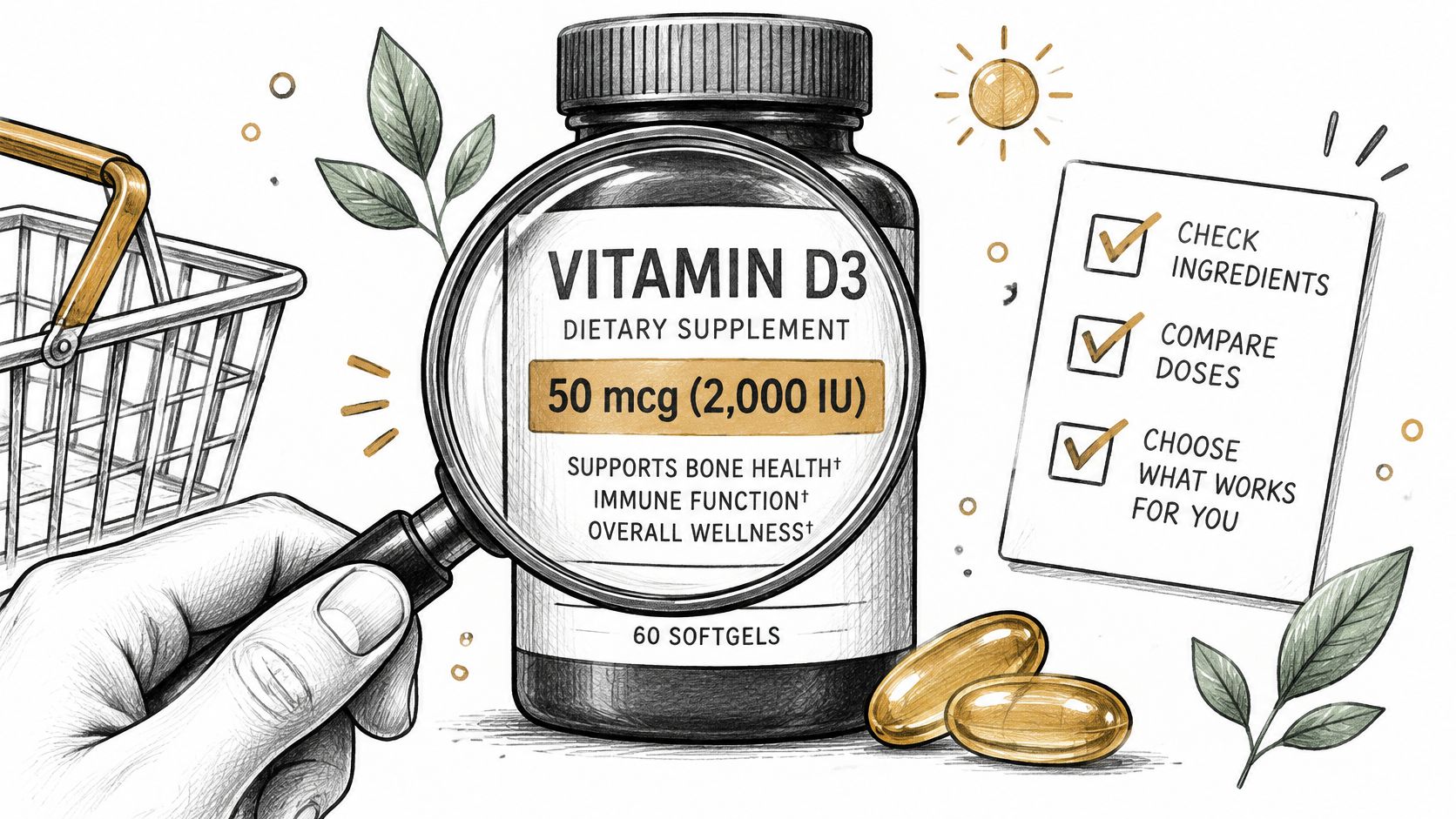
Use a written checklist rather than relying on the impression a package creates.
Apply the same standard to our products
Our offerings are Femme Fresa Fatale Women's Vitality & Wellness Gummies and the Tease Trio three-pack. Read our product pages for category, claim wording, individual amounts, quality documentation, warnings and duration guidance; mark anything not disclosed as unknown, not presumed verified.
Our gummies are for adults aged 18 and over. We recommend consulting a healthcare professional before use, especially during pregnancy or nursing, with a medical condition, or when taking medication. They aren't intended to diagnose, treat, cure or prevent a medical condition, and haven't been evaluated or approved by the FDA.
Before purchasing online or through a local health and wellness store, resolve these questions:
- Composition: What are the individual amounts, chemical forms and botanical preparations?
- Evidence: Are there studies on the finished product, and what outcomes did they measure?
- Quality: Is a relevant batch certificate available?
- Suitability: What pregnancy, medication and duration warnings apply?
If those answers remain missing, treat the purchase as an unverified general-wellness choice, not a demonstrated solution.
We offer Femme Fresa Fatale daily women's wellness gummies and the Tease Trio three-pack for shoppers interested in feminine vitality, confidence and connection. Visit Eve's Eden to review the product information, then bring the complete label and any unanswered dose or medication questions to your pharmacist before deciding whether it fits your routine.