Women's Supplements: What Works and What to Skip
Women's supplements explained: what each ingredient does, how to check safety and dosage, and how to judge wellness claims before you buy.
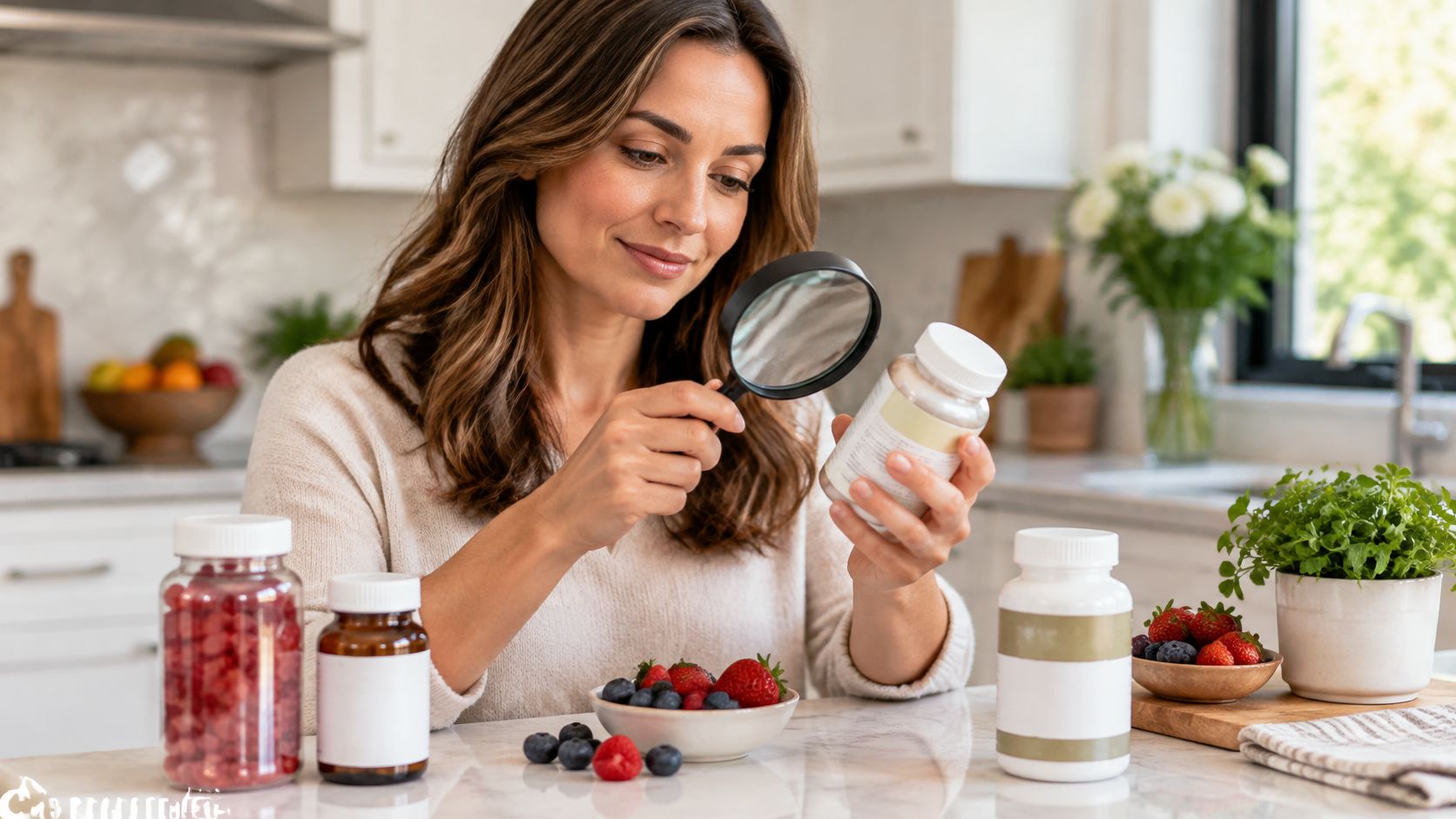
Women's health supplements brought in more than $980 million in U.S. sales in the 52 weeks ending September 8, 2024, up just 0.6% year over year, according to SPINS data reported by NutraIngredients. A near-billion-dollar category that has stopped growing is a category competing on wording rather than on new science.
That's the trap. Two gummies can both say "clinically studied botanicals" while one supplies the amount used in the trial and the other supplies a fraction of it. A label can promise "supports mood" and still be leaning on a study of a single ingredient that was never tested inside that gummy, at that dose, in that combination.
The skill worth building is narrower than it sounds. Judge a women's supplement by the ingredient, the amount, the form and the safety conditions, and treat the wellness language as decoration until those four things check out.
Who Takes Women's Supplements and Why
Women take supplements for a wider set of reasons than the phrase “women's health” suggests. Some reach for familiar staples: a multivitamin, vitamin D capsule, iron tablet, fish-oil softgel or folic acid tablet when planning a pregnancy. Others choose botanical blends and gummies positioned around mood, energy, confidence and intimacy, often fruit-flavored and packaged to feel more like a treat than a regimen.
Those products share the same regulatory category in the U.S. A supplement reaches the shelf as a food-category product, and the manufacturer carries responsibility for its contents. That makes the label the practical dividing line between a clearly disclosed nutrient product and a formula that relies mainly on attractive wording.
Supplement use itself is mainstream. In the 2017 to 2018 National Health and Nutrition Examination Survey, 57.6% of U.S. adults had used at least one dietary supplement in the previous 30 days, and the split by sex was wide: 63.8% of women against 50.8% of men, a 13.0-percentage-point difference, as summarized by the Congressional Research Service. Multivitamin-mineral products were the most-used category, followed by vitamin D and omega-3 fatty acids. That gap helps explain why so many shelves are organized around women, though broad use says nothing about whether a particular product fits a particular goal.
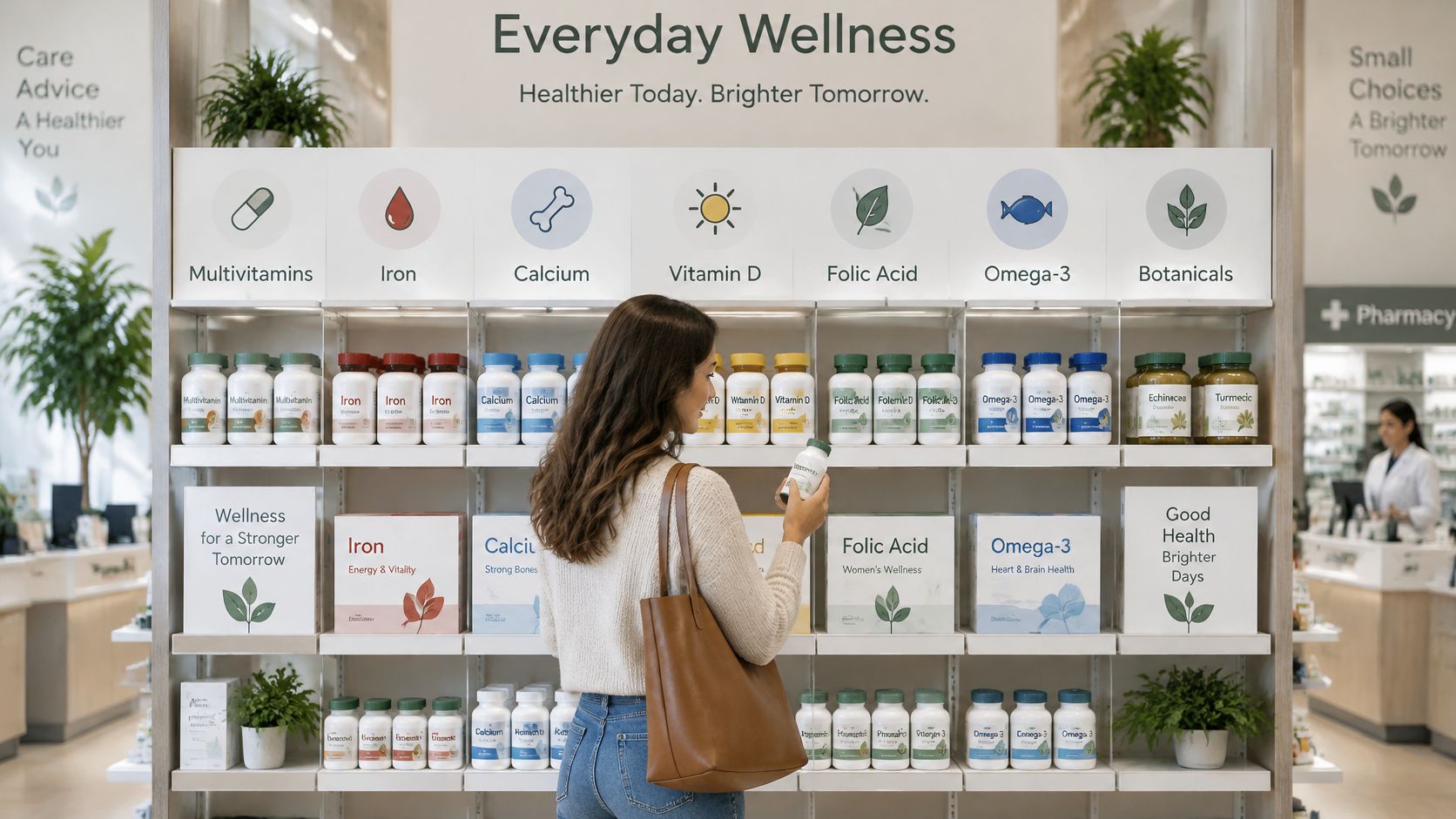
The pattern appears outside the U.S. as well. In 2023, 43.7% of adult Australian females took a dietary supplement against 30.8% of adult males, according to the Australian Bureau of Statistics. These counts cover dietary supplements generally rather than purchases by advertised benefit, so a gummy sold around confidence sits in the same broad category as a multivitamin.
That limit matters. Surveys can show the habit is ordinary, but they cannot show which claim persuaded the buyer. Choosing well starts with four checks: match the ingredient to the reason for taking it, confirm the amount and form on the label, ask whether a suspected nutrient shortfall calls for a blood test first, and read the cautions against your own health situation. Those checks apply equally to a standard nutrient and a botanical blend. Evidence tied to an ingredient still has to be weighed against what the finished product supplies.
Common Goals and the Ingredients Linked to Each
Six goals account for most of what women's supplements are sold to do. The table pairs each one with the ingredient usually attached to it, how strong the evidence is, and the caution that matters most. Read the evidence column before the ingredient column.
| Goal | Ingredient | Evidence strength | Main caution |
|---|---|---|---|
| Bone health in adult women | Calcium with vitamin D | Well established when dietary intake is low | Count food and supplement intake together |
| Confirmed iron deficiency or heavy periods | Iron, dosed as elemental iron | Strong for treating confirmed deficiency | Test before dosing; excess iron is harmful |
| Pregnancy planning | Folic acid, 400 to 800 mcg daily | Strong (USPSTF grade A) | Start at least 1 month before conception |
| Heart health | Omega-3 fatty acids (EPA and DHA) | Mixed; varies by outcome | Can interact with blood-thinning medicines |
| Fatigue | Iron or vitamin B12 | Supported only when a deficiency is present | Fatigue alone doesn't confirm a deficiency |
| Mood, stress or sexual wellness | Botanicals such as maca, damiana and ashwagandha | Limited; mostly small or ingredient-level studies | Studies rarely test the finished gummy at the same dose |
Where the evidence is strongest
Bone health is the most settled row. Calcium paired with vitamin D is well established when dietary intake is low, and the caution is arithmetic rather than chemical: count calcium from food and from supplements together, because the total is what matters and more isn't better. A woman who eats yogurt at breakfast and takes a calcium pill at night may already be at her target. Calcium citrate is gentler on the stomach, while calcium carbonate delivers more elemental calcium per tablet, which is why serving sizes differ so much between brands.
Iron has strong evidence, but only for a specific job: treating a confirmed deficiency or replacing losses from heavy periods. That qualifier carries the weight. A ferritin test and a hemoglobin count tell you whether iron is the answer. A symptom doesn't.
Folic acid is the row with the clearest timing rule and the highest confidence level in the table, and it gets its own treatment below.
Where wording outruns data
Omega-3 trips up readers who expect a simple verdict. The evidence is mixed and it depends on the outcome you're asking about: a question about triglycerides is a different question from one about heart rhythm or cardiovascular events. The interaction with blood thinners is real and deserves a conversation before fish oil joins a medication list.
Fatigue is the row where people skip the test. Iron or B12 helps when a deficiency exists and does close to nothing when one doesn't. Buying a B-complex for tiredness without a blood test is a guess dressed as a plan.
Mood, stress and sexual wellness carry the weakest evidence of the six. Studies that exist usually test one botanical in isolation at a fixed dose for a fixed number of weeks. A finished gummy with a proprietary blend, a smaller dose and four other botanicals is not the thing that was studied.
A useful test: when a row's evidence reads limited, treat the product as a preference rather than a treatment, and expect a preference to be judged over weeks, not by a promise on the front of the box.
What the table can't answer is how much you need. That depends on your diet, your cycle, your medications and your lab results, which is why the timing and testing cases deserve their own attention.
Iron and Calcium Timing Depends on the Person
Absorption is the reason the timing rules exist, so start there. Heme iron from meat and seafood is absorbed more readily than nonheme iron from plants and fortified foods. Estimated absorption runs about 14 to 18% from mixed diets containing substantial meat, seafood and vitamin C, against roughly 5 to 12% from vegetarian diets, according to the NIH Office of Dietary Supplements.
Two dietary partners shift that number. Vitamin C raises nonheme absorption, which is why a glass of orange juice alongside a plant-based iron meal is a genuine strategy. Calcium can interfere with absorption, which is why separating calcium and iron supplements by a few hours is standard advice rather than folklore.
The reason depletion matters is downstream. As stored iron falls, hemoglobin synthesis slows, red cells come out smaller and less hemoglobin-rich, and oxygen transport suffers. That's the path from a low ferritin result to breathlessness on a staircase.
Pregnancy raises the recommended intake to 27 mg per day, but that figure isn't a green light for high-dose iron. Excess iron is possible, and gastrointestinal intolerance is common enough that many women abandon the tablet before their stores recover. Suspected deficiency, pregnancy, heavy menstrual bleeding or a diagnosis of anemia all point to clinician-directed testing rather than a dose inferred from how you feel.
Practical rule: elemental iron is the number that matters, the salt or chelate is the form, and the meal is the variable. Get all three on the table before you compare two bottles.
Three habits make iron practical. Specify the dose as elemental iron, not the weight of the compound, since ferrous sulfate and iron bisglycinate at the same milligram count don't deliver the same amount. Identify the iron salt or chelate on the label, because tolerability lives there. Keep iron at a different meal from calcium-rich supplements, and pair it with a vitamin C source when the diet is plant-heavy.
Say a woman with heavy periods takes her calcium-and-vitamin-D supplement with breakfast and her iron tablet with the same meal, then doubles the iron a month later because she still feels tired. She's done two unhelpful things at once, blocking part of the absorption and skipping the test that would have shown whether her stores were moving. The better sequence is a ferritin and hemoglobin check first, then a dose set by a clinician, then iron taken away from the calcium.
Folic acid timing for pregnancy planning
The neural tube closes in the first weeks of pregnancy, often before a test turns positive. That single fact explains why the advice around folic acid is about timing rather than potency, and why starting after a positive test can miss part of the window when it matters most.
Here's the planning timeline in visual form.
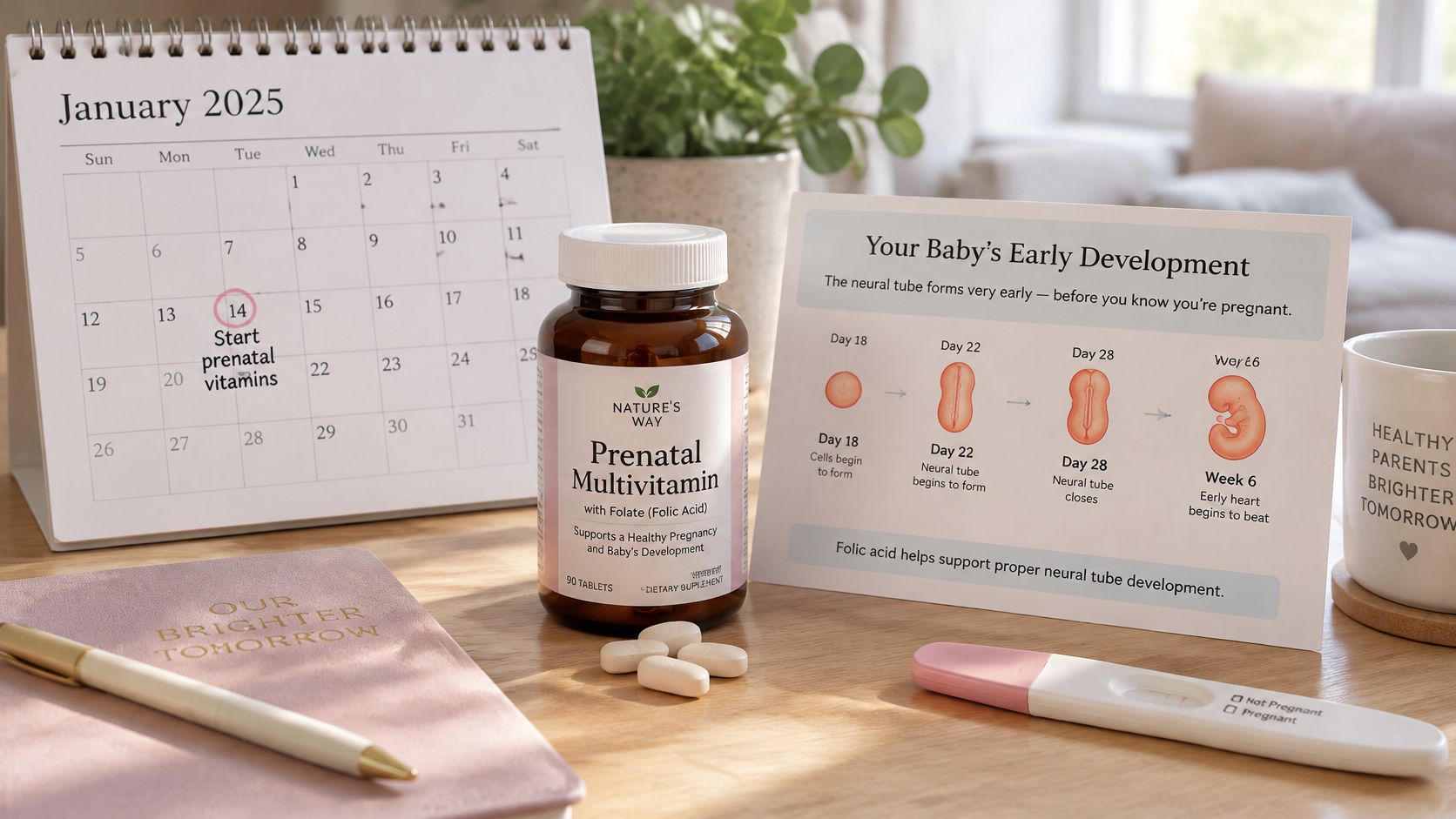
The guidance is unusually specific for a supplement question. The U.S. Preventive Services Task Force gives a grade A recommendation for daily supplementation containing 400 to 800 mcg of folic acid, beginning at least one month before conception and continuing through the first two to three months of pregnancy, per its preventive medication recommendation. The Task Force reviewed the evidence and found convincing risk reduction for neural tube defects with periconceptional supplementation.
The exceptions matter as much as the recommendation. A previous affected pregnancy, certain medications that block folate function, or other very high-risk circumstances call for clinician-directed dosing rather than self-escalation. Taking more than the recommended amount isn't a safer version of the plan.
A planning sequence that works
- Before you start trying: talk to a clinician about the right dose for your situation, and mention every medication and supplement you already take.
- At least one month before conception: begin a daily folic acid supplement at the recommended amount.
- Through the first trimester: keep going, including the weeks before a test confirms anything.
- After that: follow your clinician's plan for the rest of pregnancy rather than continuing the same bottle out of habit.
If you want the mechanism in plain language before you shop, this short explainer covers why the early weeks decide the outcome.
Labels deserve scrutiny here. A product built for pregnancy planning should state the folic acid amount in micrograms clearly, name the population it's intended for, and avoid implying that a general women's wellness gummy replaces prenatal care or individualized medical advice. If the front of the bottle says "pregnancy support" and the panel gives a number well below the recommended range, that's your answer.
How to Read a Supplement Label Before You Buy
Under the Dietary Supplement Health and Education Act, approved on October 25, 1994, the FDA generally does not approve supplements for safety or effectiveness before they reach shoppers, as the agency explains in its consumer guide to dietary supplements. Manufacturers are responsible for safety and for substantiating claims, and regulators can act only after a product is on the market.
That's why the label carries more weight here than it does on a cereal box. Seven checks, in order:
Find the supplement facts panel and the serving size. Then count how many servings make up your full daily dose. Two gummies per serving means a bottle of 60 is a 30-day supply, not a 60-day one.
Read the elemental amount for minerals. Iron and calcium are listed as compounds, but the number that matters is the elemental mineral released. A label that hides this behind compound weight makes comparison impossible.
Confirm the ingredient name and form. For botanicals, look for the plant part and the extract ratio, since root and leaf aren't interchangeable. For minerals, note the salt or chelate.
Compare each amount with the daily value, then check upper limits. This matters most when you take several products. A multivitamin, a gummy and a single-nutrient tablet can stack the same vitamin three times over.
Look for independent third-party testing and a GMP statement. Treat both as checks on quality control, not as proof the product does anything. Testing tells you the label matches the contents.
Read the claims carefully. Structure-function wording such as "supports mood" is permitted. A claim to treat, prevent or cure a disease is a signal something is wrong.
Check the target group and warnings. Pregnancy, breastfeeding, medication and age cautions belong on the label. If they're missing from a product aimed at women of childbearing age, ask why.
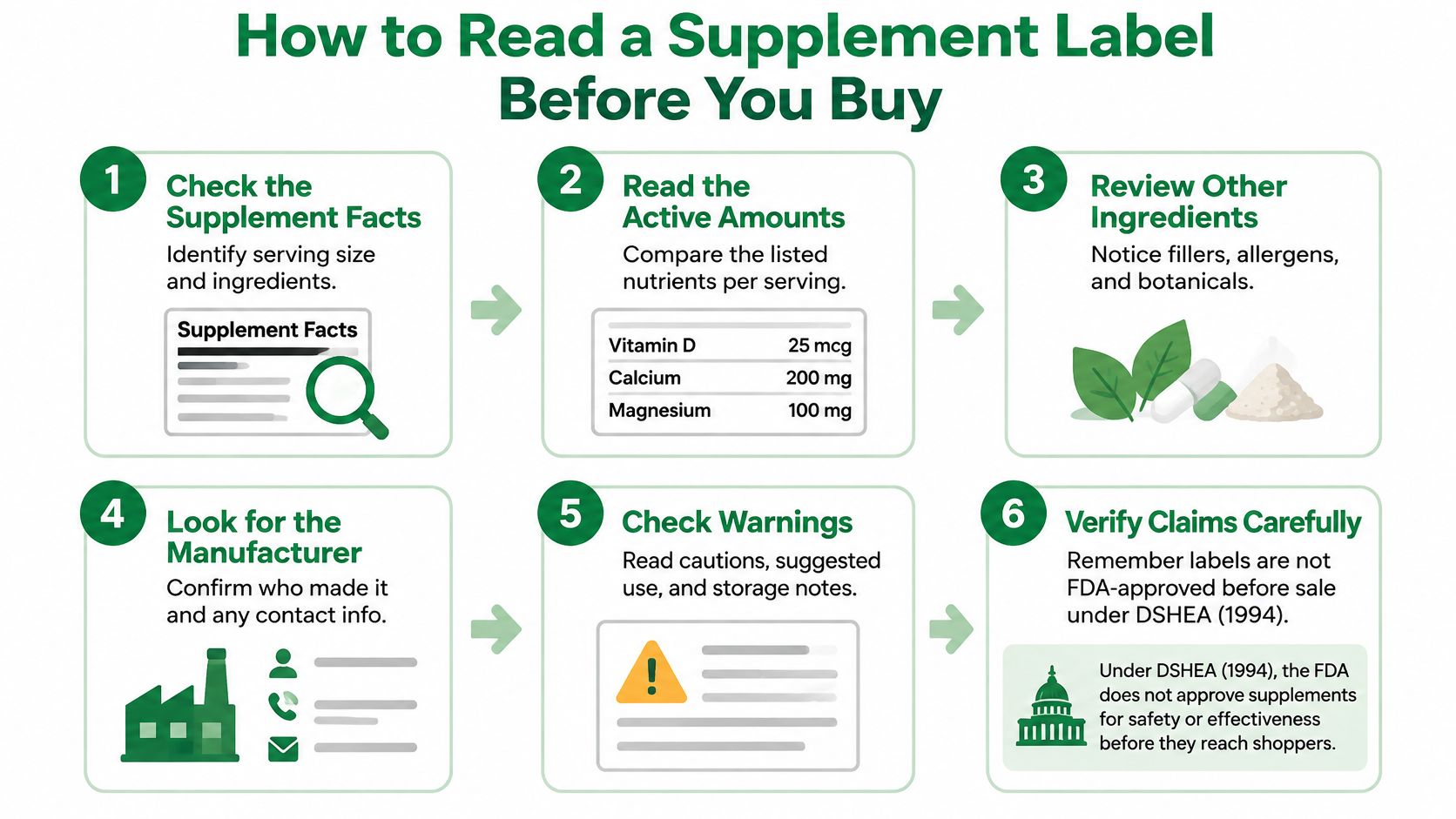
Keep the checklist short enough to use in the aisle: serving size, elemental amount, ingredient form, daily value against upper limit, third-party test, claim type, warnings. Seven questions, under two minutes, and you'll know more than the front of the bottle is telling you.
Safety Questions to Ask Before You Start
A product can pass every label check and still be wrong for you, because labels describe products and not people. Safety in this category isn't a disclaimer paragraph at the bottom of a blog post. It's a short set of questions with real answers.
The four questions the FDA recommends asking: whether the product and amount are appropriate for you, how long to take it, which side effects to watch for, and what it interacts with, including medicines, foods and other supplements.
Some groups should route those questions through a clinician before the first dose. Pregnant and breastfeeding women lead the list, along with anyone facing surgery, anyone taking blood thinners, antidepressants, thyroid or diabetes medicines, and anyone managing a diagnosed condition. The interaction risk isn't hypothetical for botanicals either, since several affect the same pathways as common prescriptions.
Cumulative exposure is where people get caught
No single label looks excessive. The multivitamin supplies part of the daily value, the gummy supplies another part, and the single-ingredient tablet adds a full dose on top. Add them up and you can pass an upper intake limit without ever exceeding a recommended serving on any one bottle. Once a week, put every supplement you take on the counter and add the overlapping nutrients.
Then know your stop signals. A rash, palpitations, persistent stomach pain, unexplained bleeding or bruising, or a worsening of the exact symptom the product was meant to fix all mean the same thing: stop and get advice. Report a suspected reaction through the FDA's MedWatch program, which is how patterns get caught after products are already on shelves.
The gap between confidence and competence is measurable. A 2025 cross-sectional study of 1,006 adults in Western Saudi Arabia found that 70.5% used dietary supplements and 82.5% knew what supplements were, yet only 41% knew correct doses and methods of use, while 30.3% were uncertain about safety, and 28.1% of users reported side effects, as published in Nutrients. Knowing the word "supplement" and knowing how to take one are different skills.
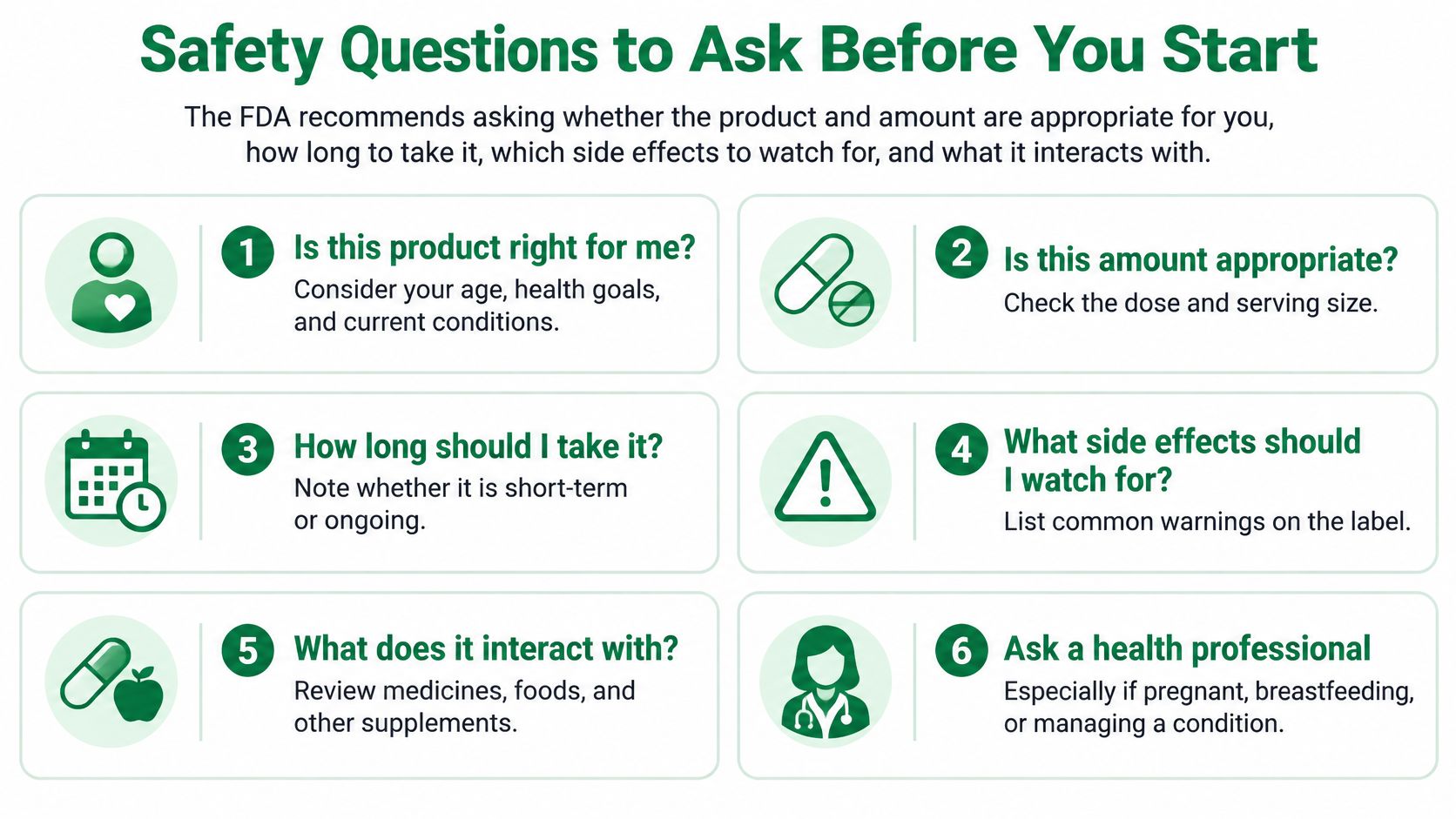
Write the answers down before you buy, not after. The product that survives the questions is the one worth the counter space.
Separating Evidence From Marketing Claims
A trust gap runs straight through this category. In a 2025 UK YouGov survey, 21% of adults reported using a wellness supplement that year, yet 71% of women agreed that most wellness supplements are overhyped, while 70% of women said they were more likely to trust products that appear science-backed, according to YouGov's research on supplement use. Women are skeptical and receptive at the same time, which is exactly why the wording gets engineered so carefully.
Ingredient evidence is not product evidence
Say a trial tests one ashwagandha extract at a fixed daily dose for eight weeks and finds a modest change on a stress questionnaire. That's evidence about that extract, at that dose, over that period. A gummy that lists ashwagandha inside a proprietary blend, with no amount disclosed, has borrowed the study without inheriting any of its conditions. The same logic applies to maca and damiana, the two botanicals most often paired with it in women's wellness products.
"Clinically studied ingredients" therefore means something narrow. It says studies exist for ingredients. It doesn't say this product was studied, that it contains the studied amount, or that the studied outcome applies to you.
Three questions close most of that gap. Does the label name the exact ingredient form used in the research? Does it list an amount rather than hiding it inside a blend? And does the claimed benefit match what the study measured, rather than a looser cousin of it?
The gummy trade-off
Format is where convenience and evidence part ways. Gummies have become one of the most popular supplement formats, and the appeal is easy to understand: they taste good, they feel familiar, and a format people enjoy taking has real value for adherence. A pleasant delivery form says nothing about efficacy, though, and it raises fair questions about sugar content, dosing limits, stability over time, and whether a small serving can even hold the studied amount of a botanical.
Decoding the claims
| Claim | What it usually means | Evidence to ask for |
|---|---|---|
| Clinically studied ingredients | Studies exist for the ingredient, not necessarily this dose in this product | A trial of the same ingredient at the amount listed on this label |
| Supports mood or energy | Structure-function wording with no disease outcome named | A named outcome, the measurement method and the study length |
| Supports sexual wellness | A subjective, context-dependent outcome | A validated questionnaire score and a stated timeframe |
| No harsh chemicals or natural | Describes sourcing, not safety or effectiveness | Third-party testing results and full ingredient amounts |
| Fast-acting formula | Often self-reported and shaped by expectation | Controlled data on time to effect versus placebo |
Then set your own endpoint. Pick one or two measurable outcomes, such as how you sleep or how steady your mood feels in the late afternoon, rate them on the same simple scale before you start, and review at a set point several weeks in. A change you notice on day one is expectation until it survives the calendar.
If you want to know what a testing certificate covers, our explainer on third-party tested supplements walks through what the seals verify and what they leave out.
Supplement Choices Across Life Stages
The same bottle carries different risk at 26 and at 52, so your situation, not the category, sets the question.
Pregnancy or trying to conceive: the folic acid sequence and prenatal care come first, and iron needs rise during pregnancy. A general wellness gummy isn't a prenatal.
Breastfeeding: every ingredient and amount deserves a clinician's review before it becomes a daily habit, because the safety questions that apply to you also apply to an infant.
Heavy periods or suspected anemia: test before you dose. This is the one case where guessing costs you months of feeling unwell.
Perimenopause and menopause: bone health is the goal with the most settled evidence, so count calcium from food and supplements together rather than adding a pill on top of an already sufficient diet.
Vegetarian and low-meat diets: nonheme iron absorbs poorly compared with heme iron, so food alone may leave you short, and vitamin B12 is worth checking on a plant-based diet.
Blood thinners, antidepressants, thyroid or diabetes medicines: review interactions before adding any botanical or omega-3 product, and bring the actual bottles to the appointment.
Notice that only one of these situations starts with shopping. The others start with a test, a prescription list or a clinician's question, and the product decision follows.
For a closer look at how a daily multivitamin fits across these stages, our guide to women's multivitamins covers what a general formula should and shouldn't try to do.
Your Pre-Purchase Decision and Where Eve's Eden Fits
Three gates, in order. Match your goal to an ingredient with reasonable evidence in the goal table, rather than to a feeling on the front of the box. Confirm the elemental amount, the form and the serving size using the seven label checks. Then clear the safety questions with a clinician if pregnancy, breastfeeding, surgery or a medication list applies to you.
If a product passes all three, set one measurable outcome and give it several weeks before you decide. A verdict formed on day two is a verdict about expectation.
Any brand has to pass the same gates, including the one whose site you're on. Eve's Eden sells Femme Fresa Fatale gummies, a daily gummy with botanicals that we describe as supporting confidence, vitality and feminine well-being. Hold that claim against the goal table: confidence and vitality are subjective outcomes, and the ingredient-level evidence behind botanicals such as maca, damiana and ginseng is limited, which makes the product a preference to be evaluated over time rather than a treatment.
We're direct about the boundaries. Our gummies are for adults 18 and over, they aren't intended to diagnose, treat, cure or prevent any medical condition, and they haven't been evaluated or approved by the FDA. Don't exceed the recommended dose, and keep the bottle out of reach of children. If you're pregnant, nursing, taking medication or managing a medical condition, talk to a healthcare professional before you start. That isn't fine print. It's the same standard this guide asks of every product on the shelf, applied to ours.
For a wider look at how our products fit into a wellness routine, browse our women's health products and read the formula before you decide.
Eve's Eden makes Femme Fresa Fatale, a strawberry-flavored daily gummy built around maca root, damiana and ginseng for women who want a simple ritual instead of a cabinet full of bottles. You now have the three gates in hand: the ingredient that matches your goal, the amount on the label, and an honest answer about whether the product is right for your situation. Visit Eve's Eden to read the full product details and decide whether it clears your own checks.