Gummies vs Pills: Which Format Fits Your Routine
Gummies vs Pills compared on testing, potency, convenience and routine fit, so you can choose the format that suits your daily supplement habit.
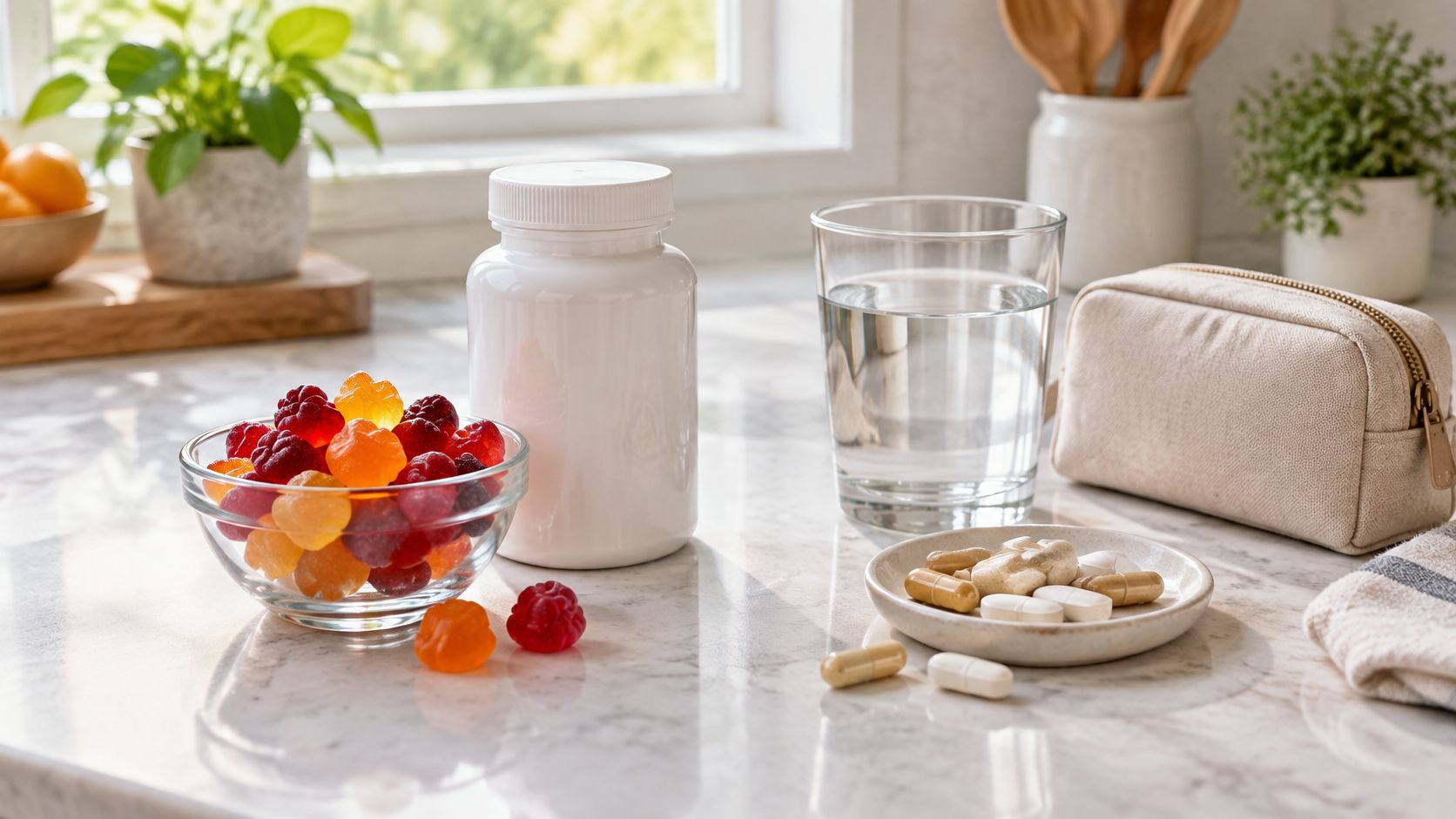
Gummies accounted for 25.5% of the U.S. supplement market in 2024, compared with 7.4% for tablets, according to Nutrition Business Journal estimates reported by Nutraceuticals World. That makes gummies a mainstream choice, not a novelty. It doesn't establish that they deliver more accurate doses, absorb better, or produce better results.
The useful question in gummies vs pills is what changes when a manufacturer puts ingredients into a chewable gel instead of a tablet or capsule. The answer includes production controls, ingredient capacity, storage requirements, and the evidence needed to support the label. Choose the format that fits your routine, then judge the finished product by its documentation.
Gummies and Pills Compared at a Glance
| Factor | Gummies | Pills (tablets and capsules) |
|---|---|---|
| Swallowing and texture | Chewable, no water needed | Must be swallowed; size differs by product |
| Taste and sweeteners | Flavored, often contain sugar or sweeteners | Typically neutral or unflavored |
| Concentrated ingredients per unit | Lower capacity for concentrated ingredients | Greater capacity in a smaller unit |
| Heat and moisture sensitivity | Can soften or stick; need tighter stability control | Can be protected by coatings, desiccants, or compression |
| Production steps | Candy base, mold deposit, setting, curing, and demolding | Compression or filling; no candy-base stage |
| Portability | Compact and easy to carry | Compact and easy to carry; bottle may add bulk |
This table compares daily-use factors, not efficacy. An ingredient may be available in either format, but that doesn't make the finished formulations interchangeable. Check the ingredient form, quantity, serving size, and supporting tests before treating them as equivalent.
Swallowing and concentration often drive the initial decision. A chewable product removes the need to swallow an intact tablet or capsule. A pill, meanwhile, can accommodate a concentrated formula without allocating as much space to the ingredients that create a gummy's taste and texture.
Different production paths create different checks
The manufacturing distinction is more substantial than appearance suggests. A discussion of gummy production in NutraIngredients describes preparing a candy base, incorporating dietary ingredients, flavors, and colors, depositing the mixture into molds, setting and curing it, and removing the finished gummies before packaging.
Tablets and capsules skip the candy-base and curing stages. That doesn't exempt them from quality controls, but it means manufacturers manage a different process.
For consumers, the important consequence is that texture and ingredient delivery must work together. A gummy that tastes pleasant still needs a formulation that remains chemically and physically suitable through storage. A compact capsule still needs evidence that its contents match the label and release appropriately.
Practical rule: Use format to narrow your choices, not to certify their quality.
Portability deserves the same distinction. Both formats can fit into a bag, but a convenient package isn't permission to ignore storage instructions. Pick the format whose strengths match your routine, then inspect the label before buying.
Matching the Format to Your Routine
| Your situation | Better fit | Why |
|---|---|---|
| Trouble swallowing pills | Gummy | Chewable, without swallowing an intact pill |
| Need a high dose of one concentrated ingredient | Pill | Greater capacity in a smaller unit |
| Want a daily ritual you will keep up | Gummy, if you prefer a flavored chew | Easy to fold into an existing self-care habit |
| Sensitive to sugar or sweeteners | Pill as a starting point | Usually no sweetener; check the label for fillers |
| Carry supplements in a bag or while traveling | Either, with suitable storage | Gummies are compact but can soften; pills may have additional protection |
| Stored in a warm home or car | Pill only if its storage instructions allow it | Coatings and desiccants can help, but neither format is approved for uncontrolled heat |
| Want a botanical product with a stated amount per gummy | Either, based on the label | Compare the declared amount per serving with your intended dose |
Match the product to an actual habit
A gummy can be a sensible choice if swallowing tablets is the reason you leave supplements untouched. It removes that particular obstacle without preparation or a glass of water. Pills may fit just as comfortably into a fixed routine, especially when you already take a product with water or food according to its directions.
Travel introduces another question: where will the supplement spend the day? A purse carried indoors isn't the same storage environment as a bag left in a parked car. Choose packaging and a storage location that meet the product's instructions rather than assuming either format tolerates heat.
Our Femme Fresa Fatale gummies are strawberry-flavored and plant-based, with no pills or complicated schedules. They're compact, delicious, and easy to toss in your purse, making them discreet and travel-friendly. Those are usability attributes, not evidence about ingredient absorption or clinical outcomes.
For concentrated ingredients, work backward from the intended serving. A small-looking gummy may require a larger serving than you expect, while a capsule may deliver the target quantity in less space. Don't equate the size of the unit with the amount of the ingredient.
Separate routine instructions from outcome claims
Daily and as-needed products ask different things of the user. A daily supplement calls for a repeatable habit; an as-needed product should be evaluated against its own directions, not automatically added to a daily schedule.
Our directions for Femme Fresa Fatale are to take the suggested serving about 45 minutes before you want to feel your best, and the gummies can be enjoyed as needed with no daily commitment required. Treat that timing as our product instruction, not as independent verification that every user will experience a particular result within that period.
Consider how the choice works for different readers:
- The reader who skips large pills: A gummy addresses the practical barrier. Before buying, she checks the sweeteners, serving size, and stated amount per gummy rather than choosing on flavor alone.
- The reader seeking a concentrated dose: A tablet or capsule may be more convenient. She checks the declared quantity, coating information, and storage instructions instead of assuming all small pills are equivalent.
The format that fits your life is a useful starting point. It isn't a substitute for verifying what the product delivers.
Once you've identified a workable format, compare products within that format using their labels and lot documentation. Convenience should help you use an appropriate product, not distract you from evaluating it.
Sugar, Sweeteners and What Else Is in the Unit
A gummy contains more than its featured nutrient or botanical. Manufacturers also need ingredients that create the gel, maintain its texture, and make the formula palatable. Flavors, colors, and sweeteners are part of that formulation, not evidence of poor quality by themselves.
Pills aren't ingredient-free delivery vehicles either. Tablets can contain fillers, binders, and coatings, while capsules have a shell and may include other formulation aids. Read both formats with the same level of attention, rather than scrutinizing a gummy's sugar while ignoring a tablet's other ingredients.
Read the complete serving, not just the front label
Use this label-reading sequence:
- Find the sugar declaration. Read the amount per serving and account for the servings you intend to take. Don't confuse the amount in a single gummy with the amount in the suggested serving.
- Identify the sweetener. Look for the specific sugars, sugar alcohols, or alternative sweeteners in the ingredient list. A sugar-free description doesn't mean the product contains no sweetening ingredients.
- Check flavors and colors. If you avoid particular additives, inspect their names rather than relying on a fruit image or a natural-sounding product name.
- Inspect the pill's supporting ingredients. Read its filler, binder, capsule-shell, and coating information with the same care.
- Compare the carrier with the target ingredient. Check how much of the ingredient you want is delivered by the complete serving. Don't try to infer potency from the unit's size or total weight.
Keep dietary preferences separate from potency
A short ingredient list may suit your preferences, but it doesn't establish better dose accuracy. Likewise, an appealing flavor doesn't establish that the formula contains a suitable amount of its featured botanical.
For a daily gummy, consider the sugar contributed by the ongoing routine, not just the small amount in an individual piece. If you're managing blood sugar, review the actual label figures with a clinician before choosing. The useful comparison is between complete formulations that meet your needs, not between an idealized pill and an unspecified gummy.
Potency and Stability in Real Products
Format primarily changes usability and formulation constraints; it doesn't establish superior absorption. A gummy may be easier to take, but manufacturers still need to show that the ingredients remain present at appropriate amounts throughout the product's shelf life.
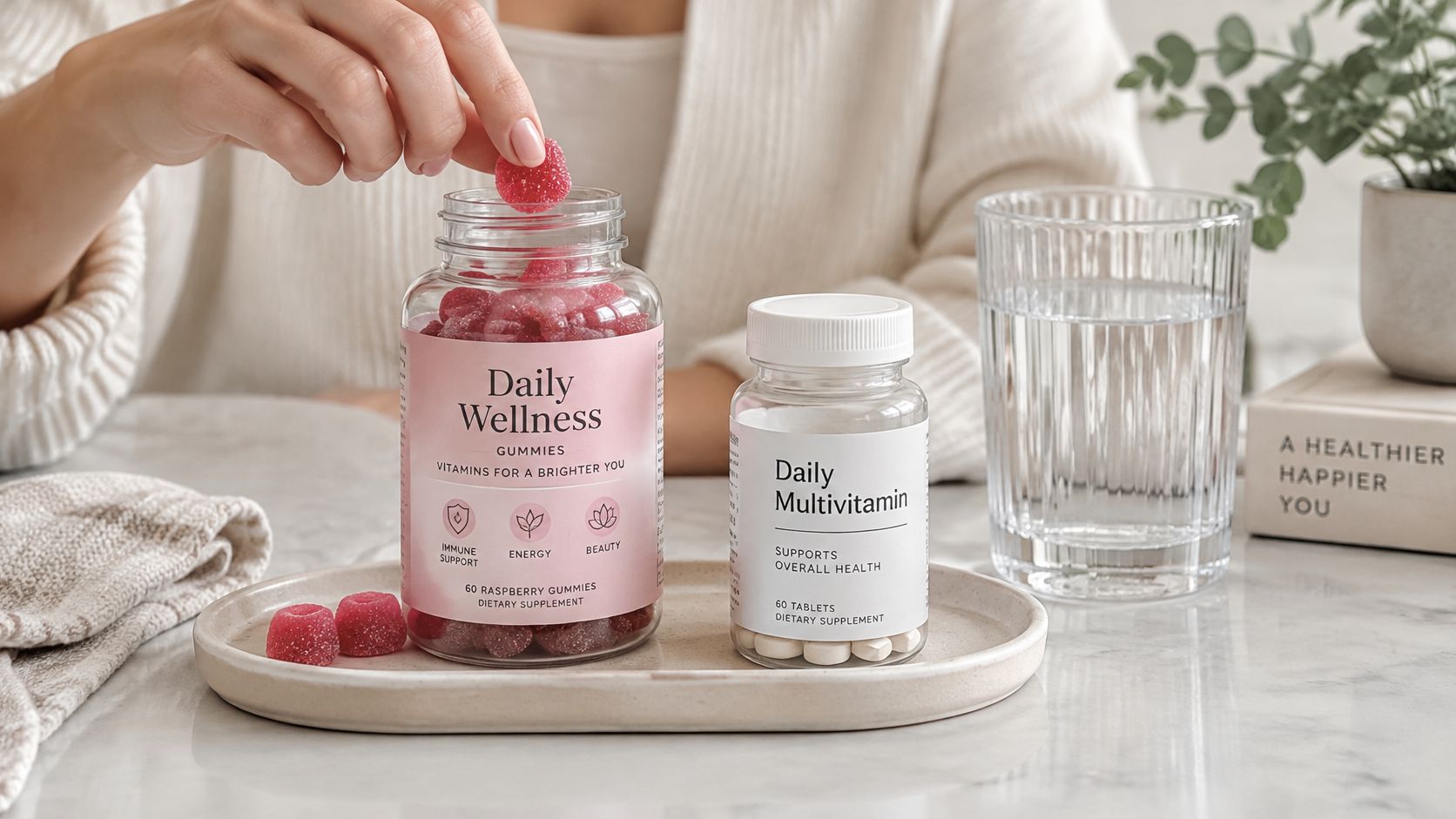
The familiar appearance of these formats can obscure those differences.
What label variability actually tells you
In specific gummy formulas tested, vitamin C results ranged from 50% to 531% of labeled amounts, and vitamin B5 results ranged from 64% to 564%, according to independent testing summarized by Consumer Reports. These findings concern the products tested, not every gummy supplement.
They also don't establish that pills are uniformly accurate. The defensible conclusion is narrower: a gummy's appearance, taste, or popularity cannot verify its labeled potency. Too little and too much are both departures from the declared amount, so a claim of extra strength isn't an adequate answer to inaccurate labeling.
A laboratory result also needs context. Ask whether the tested sample was the finished product, which lot it represented, and when testing occurred relative to manufacture and expiry. An ingredient supplier's certificate doesn't answer all those questions about the packaged supplement.
Stability is a separate question from initial potency
Gummy formulations require attention to flavoring agents, sweeteners, water activity, heat sensitivity, and botanical interactions. Manufacturers may use overages, meaning additional starting amounts intended to compensate for expected losses during storage. An overage still needs a justified specification and stability support; it isn't permission for uncontrolled excess.
Pills can be simpler to protect through coatings, desiccants, or manufacturing choices, but those measures don't replace finished-product evidence. A satisfactory result when a product leaves the factory doesn't, by itself, demonstrate satisfactory potency at expiry.
For botanical gummies, request documentation addressing:
- Potency over time: Assay results at release and support for the labeled amount through expiry.
- Storage-related controls: Microbial results and water-activity specifications appropriate to the formula.
- Contaminants: Heavy-metal testing against identified acceptance criteria.
- Shelf-life support: Accelerated and real-time stability work relevant to the finished product and its packaging.
- Serving delivery: Confirmation that the stated serving supplies the declared ingredients.
Our guide to high-potency gummies provides another way to examine potency language while shopping. Keep the distinction clear: a high labeled amount describes the intended formula, while testing establishes how closely the finished product meets its specifications.
How Testing Differs for Gummies and Pills
A gummy's shape does not establish its accuracy. Manufacturing and stability risks differ by format, so the relevant evidence is the batch test and the product specification, not whether a supplement comes as a gummy or a pill.
| Test | Gummies | Tablets and capsules |
|---|---|---|
| Dosage-unit uniformity | Verify consistent delivery of each declared ingredient across units | Verify consistency across individual units |
| Individual unit weight variation | No more than 7.5% from target weight in Health Canada's draft quality guidance | Limits depend on the applicable pharmacopeial monograph and product type |
| Disintegration or dissolution | Disintegration testing; the gel matrix can affect release | Dissolution or disintegration testing appropriate to the formulation |
| Identity, potency, and contaminants | Finished-batch analysis for identity, purity, strength, and contamination | Batch testing and compliance controls |
| Production control | Acidity, temperature, humidity, equipment capability, and moisture content | Controls appropriate to tablet compression or capsule filling |
The 7.5% figure is a quality benchmark in Health Canada draft guidance, not a universal legal rule for every supplement. Appropriate tests and acceptance criteria depend on the product and applicable requirements.
Identity, potency, and consistency answer different questions
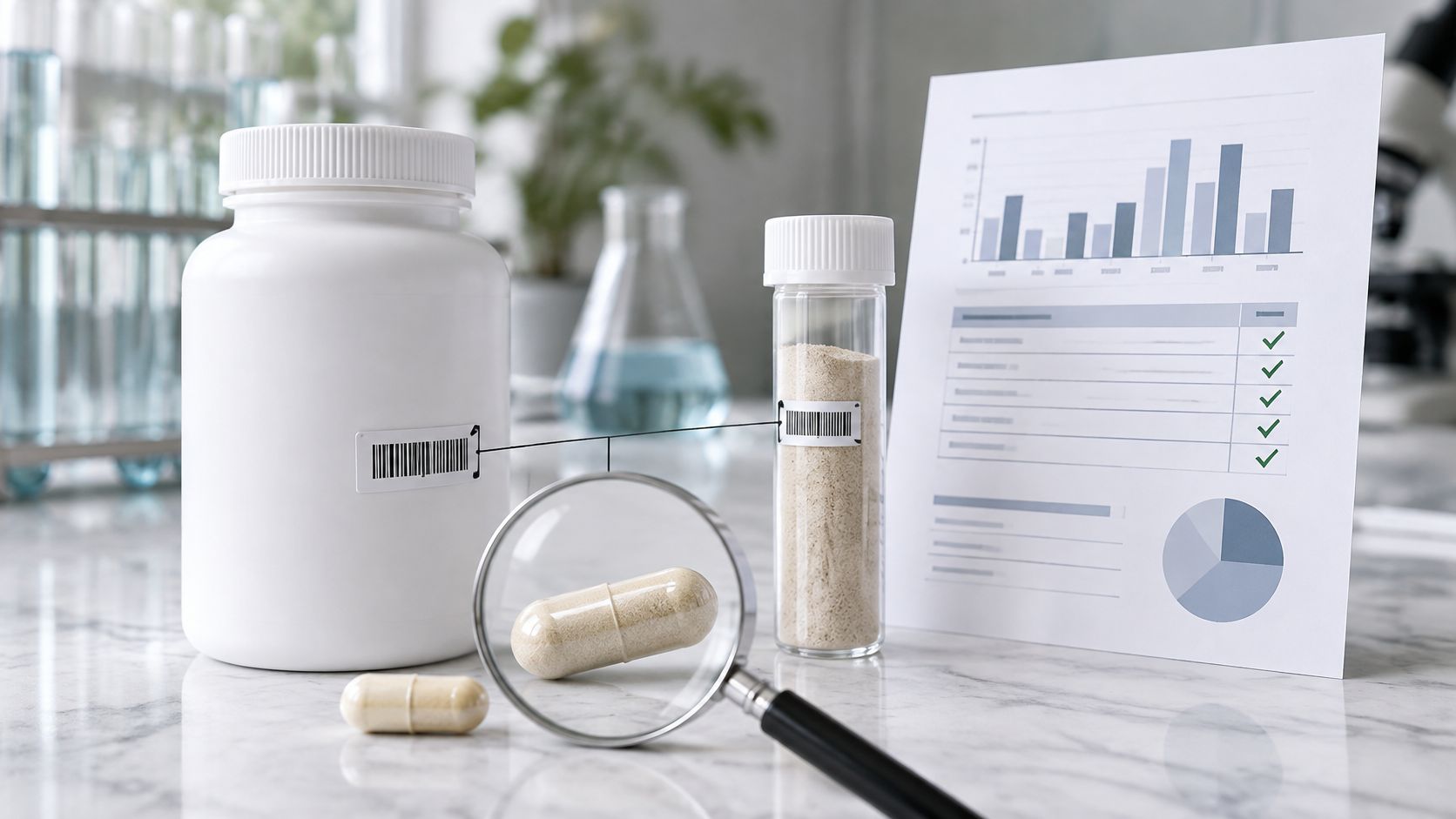
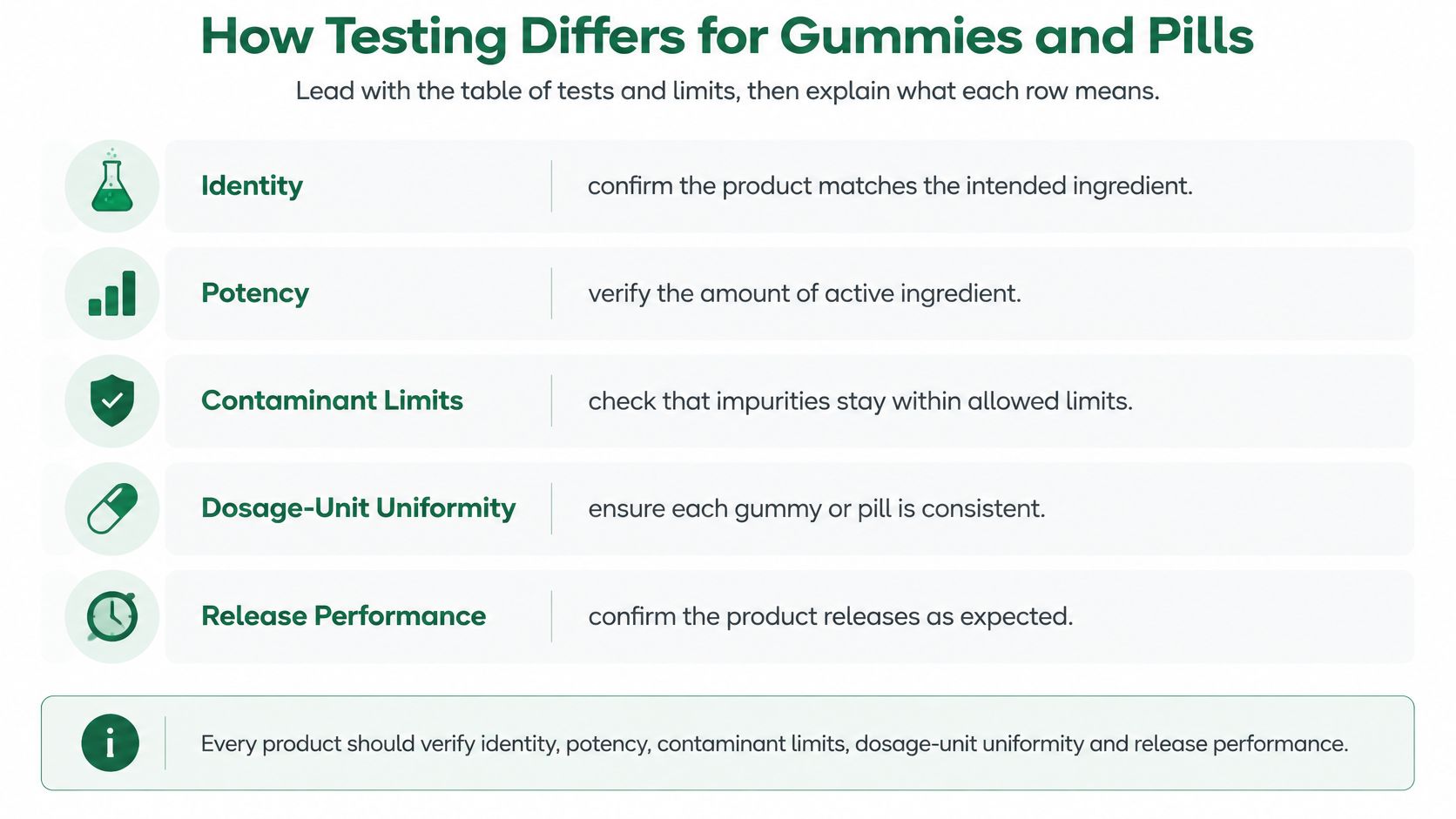
Identity testing checks whether the intended ingredient is present. Potency testing, often reported as an assay, measures how much is present. Contaminant testing checks specified impurities against defined acceptance limits.
A useful report identifies the sample, analytical method, result, and applicable specification. A generic “tested” badge does not show what the laboratory assessed.
Dosage-unit uniformity evaluates whether individual units deliver consistent quantities of declared ingredients. A satisfactory batch average does not establish consistency from one gummy or capsule to the next. Weight variation is related, but similar weights do not prove that units contain the same concentration of a botanical or nutrient. That requires suitable analytical methods and specifications.
Release testing isn't an absorption study
Tablets and capsules undergo dissolution or disintegration testing suited to their formulation. Gummies also require disintegration assessment because their gel matrix can affect ingredient release. They are chewable gels, not ordinary chewing gum.
Disintegration measures how a dosage form breaks apart under specified conditions. Dissolution measures release into a test medium. Neither test alone demonstrates how much of an ingredient a person absorbs or whether the product produces a wellness outcome.
This video offers another format for considering the gummies-versus-pills comparison.
For shoppers, the distinction is between a manufacturer's statement that testing occurs and documentation that makes the scope and results clear. This guide to third-party-tested supplements outlines questions to ask about outside testing.
Evidence boundary: A passing result supports the specific quality attribute tested. It does not establish efficacy, safety for every user, or superior absorption.
Interpret release results in light of the ingredient form, dose, and analytical method. Strong documentation states what was tested and the criteria applied, without turning a quality result into a broader health promise.
Confirm the Label and Lot Before You Buy
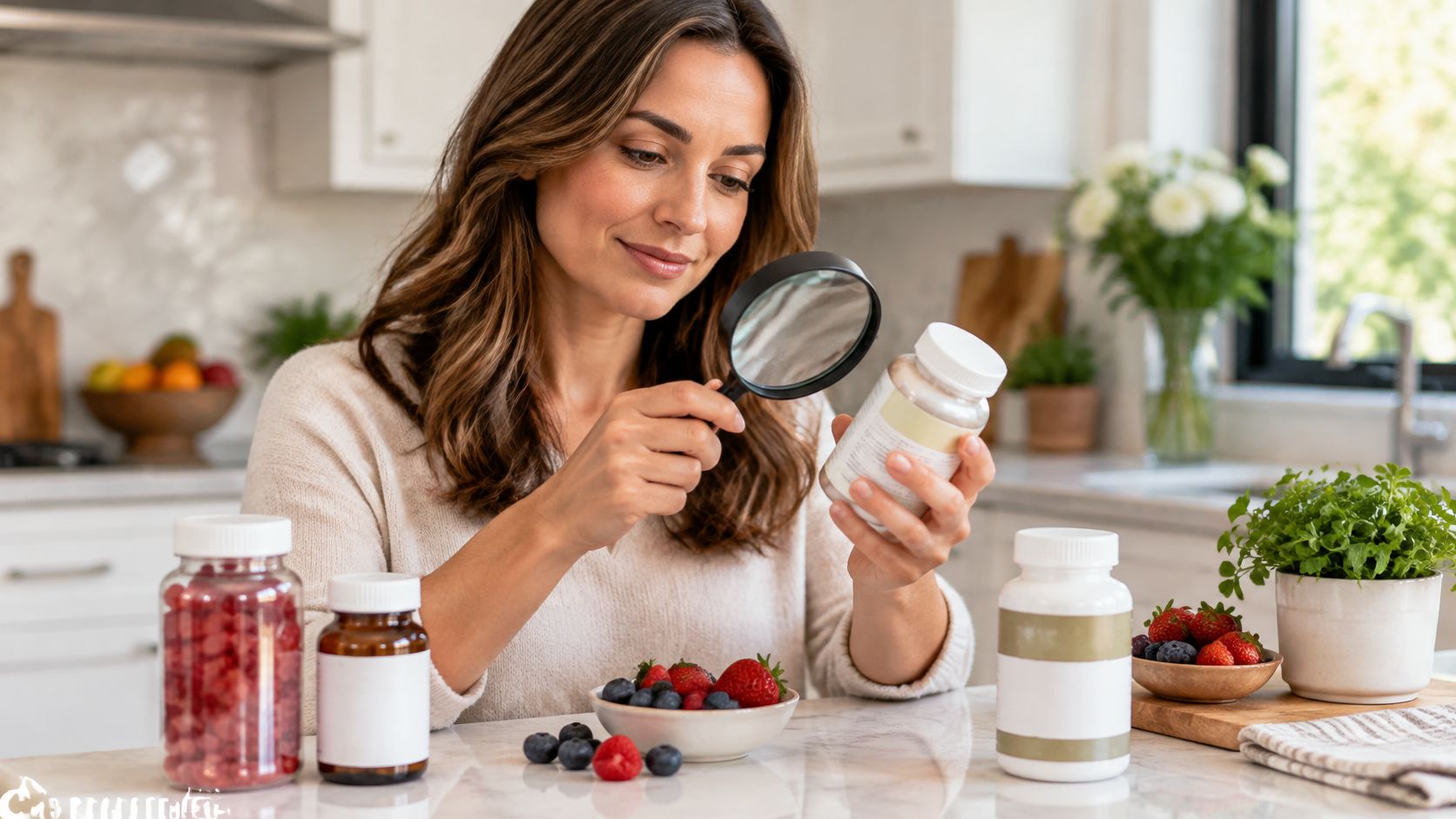
A product page helps you identify candidates. A lot-specific certificate of analysis, read alongside the label and storage information, helps you evaluate the product you're purchasing.
Our Femme Fresa Fatale gummies are described as 100% natural, vegan, gluten-free, and made in a GMP-certified facility. These statements address different attributes. Natural and dietary descriptions don't establish potency, and a facility claim doesn't substitute for finished-lot results.
Match each claim to the right evidence
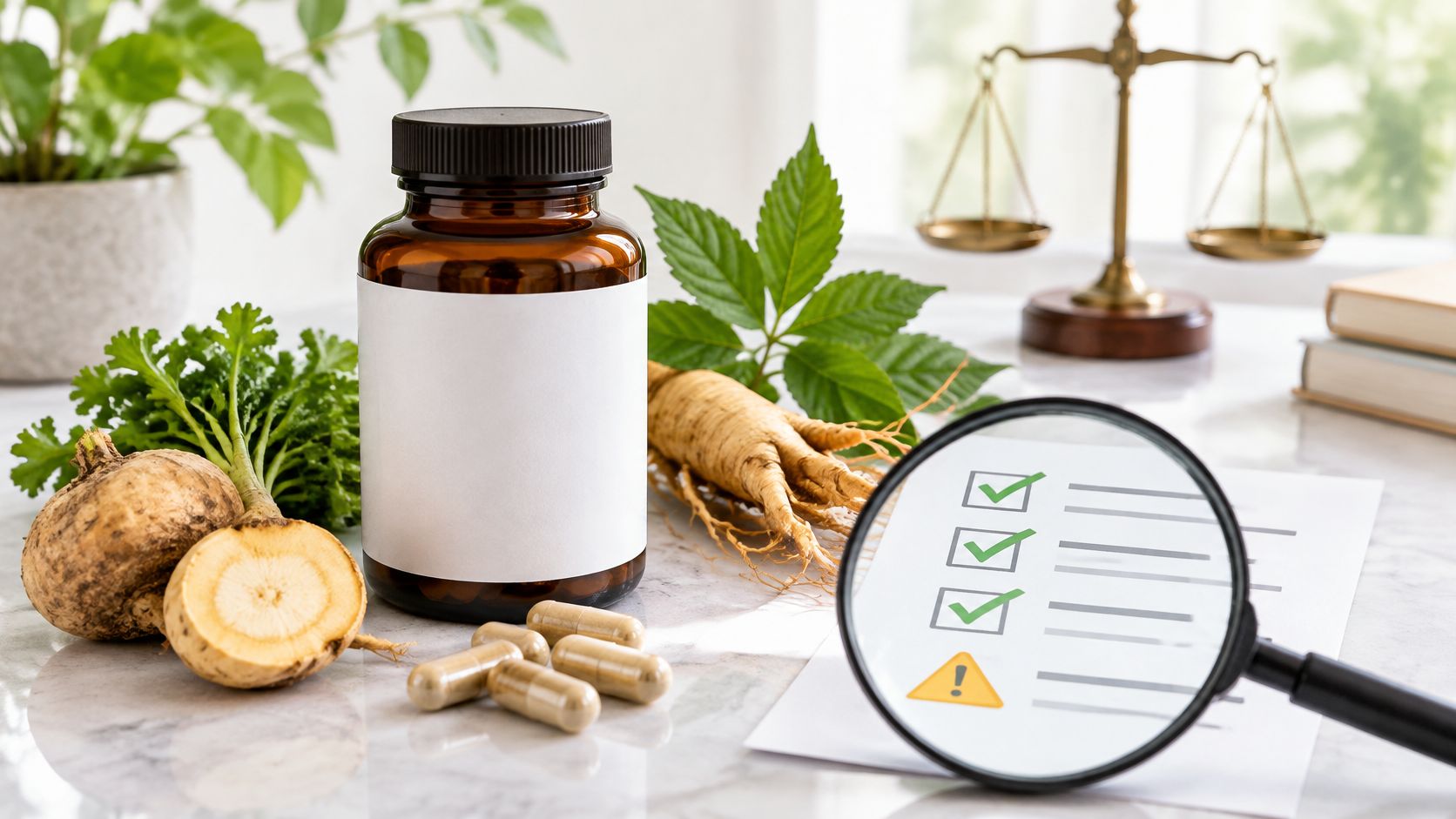
Ask what documentation would substantiate the particular claim you care about. A contaminant report doesn't establish vegan status; a facility certificate doesn't show the amount of each botanical in your serving. Quality assessment works best when each document answers a defined question.
Our explanation of how transparency works can help you organize those questions. Don't interpret missing information as proof that a product failed, but don't treat unavailable results as verified results either.
Use a pre-purchase checklist
Read the amount per serving. Compare each declared ingredient with the dose you intend to use. Check whether the label reports individual botanical quantities or only a combined blend amount.
Request the matching certificate of analysis. Look for the specific lot identifier, not just a generic brand document or a raw-material report. Confirm that the product description matches the item being sold.
Review the actual results. Check potency, heavy-metal, and microbial findings, including the units and acceptance criteria. A pass statement is more informative when you can see what the laboratory measured.
Confirm expiry and storage. Inspect the package instructions and whether stability documentation supports the stated shelf life. Plan where you'll keep the product before deciding its packaging is convenient.
Read eligibility and warnings. Our Femme Fresa Fatale gummies are for adults 18 and over. Consult a healthcare professional before use, especially if you're pregnant, nursing, have a medical condition, or take medication; don't exceed the recommended dosage.
Choose the workable format and reassess the routine. Notice whether you can follow the directions, store the product correctly, and tolerate its ingredients. Don't increase the serving to compensate for uncertain results or an inconvenient schedule.
The final decision isn't a permanent vote for gummies or pills. Format follows routine; documentation distinguishes products. Between otherwise suitable options, favor the one whose label and lot records let you verify what you're buying.
Eve's Eden offers Femme Fresa Fatale, a strawberry-flavored, plant-based gummy positioned for women's sensual wellness. Visit Eve's Eden to review the product details, compare its directions with your routine, and use this checklist to identify the label and lot information you need before purchasing.