What Are Mood Boosting Supplements Explained
Learn what are mood boosting supplements, how formulas and evidence differ, and what they cannot treat.
Mood supplements are marketed for emotional well-being, energy, stress resilience, or a positive mood. They are dietary supplements, not products for diagnosing or treating depression. The World Health Organization's depression fact sheet estimated that 322 million people worldwide were living with depression in 2023, about 4% of the global population. Those figures describe the need for care, not evidence that supplements prevent or treat depression.
“Try something natural” can make a mood supplement sound like a straightforward solution. Yet seeing a botanical or vitamin on a label does not establish that the product improves mood or can replace clinical care. Assess the specific ingredients and amounts, then ask whether evidence supports the finished formula for the outcome it claims.
What Mood Boosting Supplements Are
Mood-boosting supplements are dietary supplements marketed to support emotional well-being, energy, stress resilience, or a positive mood rather than to diagnose or treat depression. A raincoat can help in a drizzle, but it isn't a hospital. The category can describe a wellness intention, but it doesn't establish a medical effect.
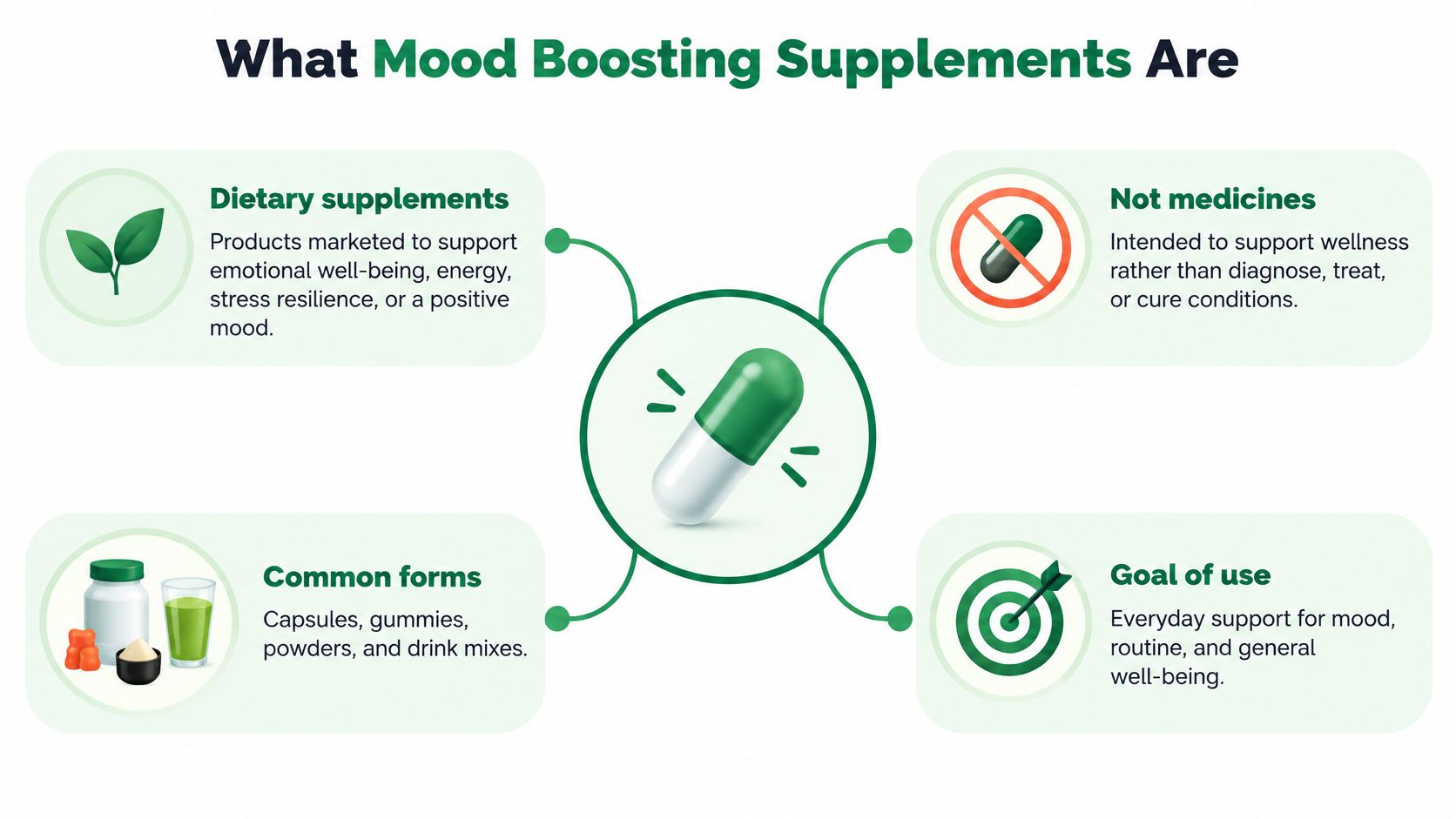
The scale of depression helps explain why people seek nonprescription products connected to mood, confidence, vitality, and daily self-care. The World Health Organization's depression fact sheet estimates that about 322 million people worldwide were living with depression in 2023, representing about 4% of the global population. Among adults, the estimated prevalence was 5.2% overall, with a higher rate among women (6.2%) than men (4.1%). These figures show the scale of need, not that supplements prevent or treat depression.
A mood product might contain vitamins, minerals, amino acids, or botanical ingredients. What a person may experience depends on the ingredient and dose, the quality and standardization of the formulation, their nutritional status, and their individual health circumstances. A gummy with a familiar herb isn't automatically equivalent to a preparation studied in a clinical trial.
That distinction matters for women's wellness products in particular. Words such as “confidence” or “mood support” may describe how a brand positions a product, but they're not evidence that the finished gummy prevents or treats a depressive disorder. Persistent or severe symptoms deserve assessment from a qualified healthcare professional, rather than a guess based on a supplement label.
Common Formulas Compared by Evidence
| Formula type | What studies or labels specify | Evidence snapshot | Realistic expectation |
|---|---|---|---|
| Vitamin D3 | Supplemental vitamin D3, often alongside other nutrients | A large randomized trial didn't support vitamin D3 for preventing late-life depression | Not a general mood preventative for healthy adults |
| Marine omega-3s | EPA and DHA from marine oils | A Cochrane review summarized by NIH found insufficient evidence that they treat major depressive disorder in adults | Not a substitute for depression treatment |
| Standardized saffron | Crocus sativus extract near 30 mg/day for about six weeks | A 2019 meta-analysis reported Hedges' g = 0.99 versus placebo and g = 1.23 alongside antidepressants; evidence is limited by publication bias and insufficient geographic diversity | Possible complementary support only when extract, dose, and duration match |
| St. John's wort | Hypericum perforatum preparations | Marketed for mood, with well-known drug interactions | Don't combine with medicines unless a clinician or pharmacist clears it |
| Unspecified botanical blend | Herbs named without extract, standardization, or amount | Can't be treated as equivalent to a studied ingredient | Wellness positioning until the label supplies dose and identity |
The table is a comparison, not a ranking. The vitamin D3 finding concerns prevention of late-life depression; it doesn't answer every question about vitamin D in every person or circumstance. Likewise, the omega-3 finding is about treatment of major depressive disorder in adults, not every possible wellness outcome.
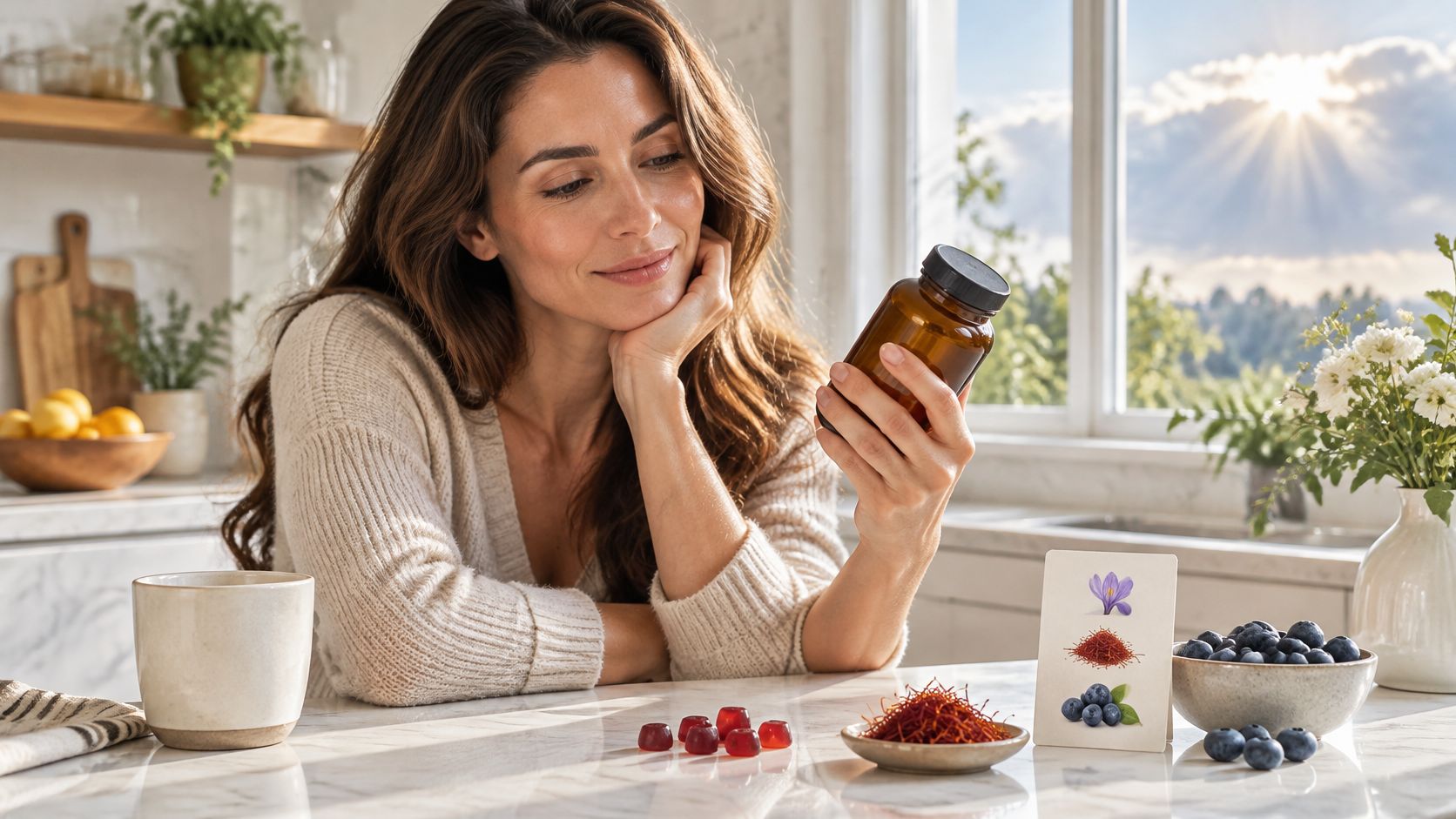
Saffron has more specific formulation evidence to consider. A 2019 meta-analysis in Nutrition Reviews reported a large reduction in depressive symptoms versus placebo (Hedges' g = 0.99) and a large effect when saffron was used alongside antidepressants (g = 1.23). Researchers have proposed effects involving serotonin, dopamine, noradrenaline, antioxidant activity, and inflammation, but publication bias and limited geographic diversity reduce confidence in how broadly to apply the findings.
The practical issue is matching the product to the studied preparation. Trials commonly used standardized saffron near 30 mg per day for about six weeks. A label that says only “saffron blend,” without identifying the extract, standardization, and dose, doesn't show that the product matches those trials. Saffron should be considered potential complementary support, not a replacement for assessment or prescribed treatment.
St. John's wort deserves a different kind of attention. Its interaction risks make it a poor choice to treat as an ordinary add-on, especially if you take medication. An unnamed botanical blend deserves restraint for another reason: without the ingredient identity and amount, a shopper can't meaningfully compare it with a study.
If stress relief is the goal, a guide to de-stress supplements can help frame the question, but the product decision still comes down to its actual formula. Match the label to a row in the table, rather than relying on the broad phrase “mood boosting.”
How Labels and Oversight Actually Work
In the United States, the Dietary Supplement Health and Education Act of 1994 amended the Federal Food, Drug, and Cosmetic Act and established the current legal definition and oversight structure for dietary supplements. That framework differs from the approval process for prescription medicines: the FDA doesn't approve dietary supplements for safety or effectiveness before they're marketed.
A legal supplement isn't the same thing as an approved medicine.
In many cases, companies can introduce a supplement without submitting premarket evidence to the FDA. There's an exception for products containing certain new dietary ingredients, which generally require notification and safety information at least 75 days before marketing. That notification rule doesn't mean the FDA has approved a product to treat a mood condition.
Use the label to make a product more concrete. A Supplement Facts panel should list the serving size, dietary ingredients, and amounts per serving. The label also provides other ingredient and manufacturer information. Manufacturers are responsible for ensuring products are safe, lawful, and not misleading, and the FDA can take action against unsafe products after they reach the market.
| Label element | Where to find it | What to verify |
|---|---|---|
| Supplement Facts panel | Main information panel | Serving size, each dietary ingredient, and amount per serving |
| Other ingredients | Below the Supplement Facts panel | Fillers, additives, and ingredients that add to total exposure |
| Manufacturer or distributor | Label footer | Contact details for reporting adverse events |
| Structure or function statement | Front or side panel | Whether it carries the required FDA disclaimer |
| Disease-treatment wording | Any panel or web copy | Treat it as a red flag because it implies a drug claim |
A mood gummy's category name doesn't prove a clinical effect. Check the exact ingredients and quantities, relevant evidence, warnings, and whether its marketing suggests that it treats or prevents a disease. If you're comparing women's wellness products, this guide to women's health products can help you keep product positioning separate from medical claims.
Before comparing a product with a study, photograph the Supplement Facts panel. That gives you a record of the serving size, ingredient amounts, and other details you'll need to check whether the product resembles the one studied.
What the Evidence Can and Cannot Promise
A plausible biological explanation isn't a promise of a measurable mood benefit in generally healthy people. A vitamin or botanical may play a role in the body, but that alone doesn't show that taking it will change how a person feels. Findings for vitamin D3 and omega-3s also illustrate why the claimed outcome and population matter.
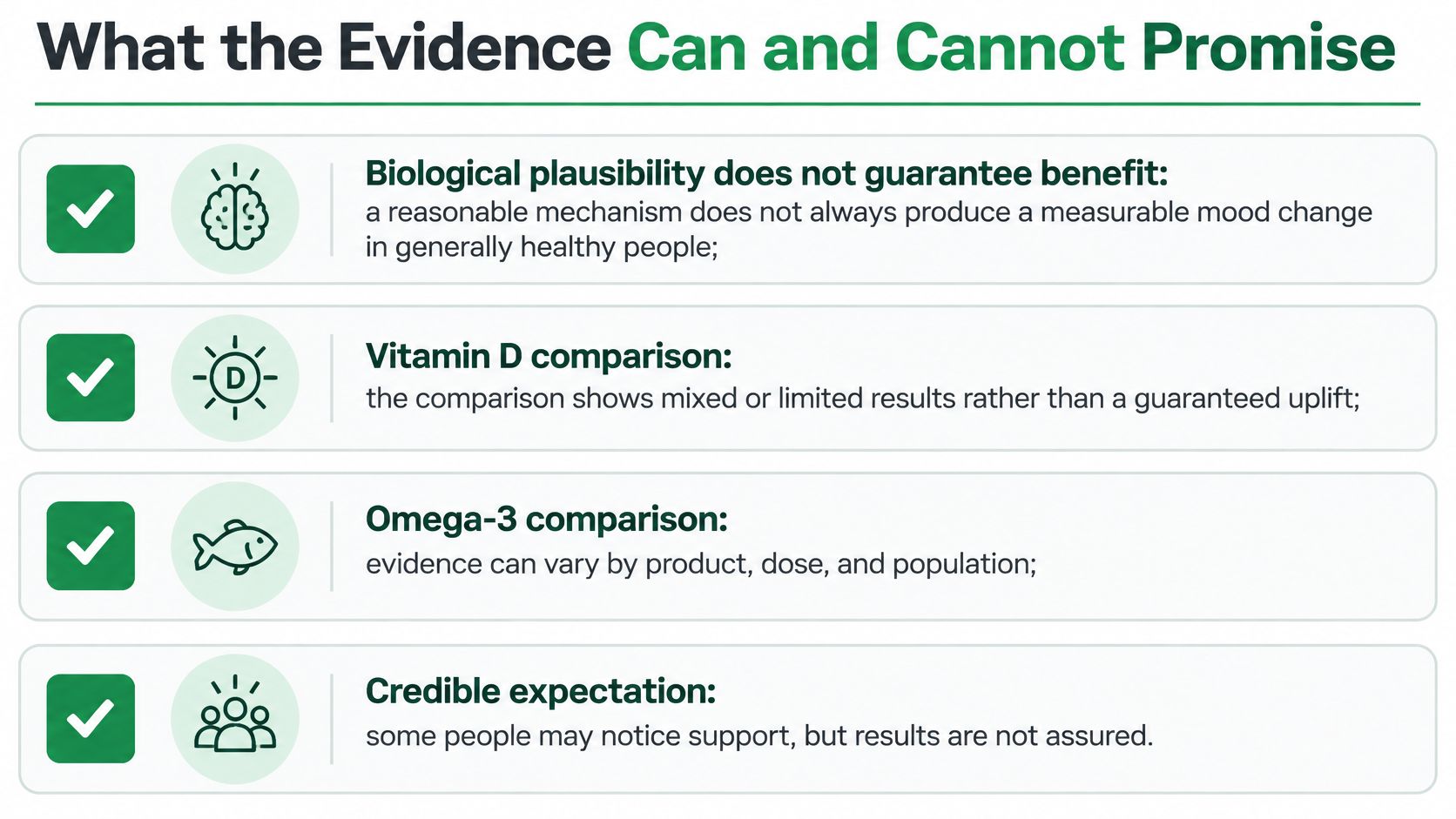
A review available through the National Institutes of Health describes evidence for commonly marketed mood nutrients as heterogeneous. A large randomized trial didn't support vitamin D3 or marine omega-3 fatty acids for preventing late-life depression, and a Cochrane review summarized by NIH found insufficient evidence that omega-3 supplements treat major depressive disorder in adults. Those findings don't establish that every formula has no effect; they show why broad promises need specific evidence.
Structure or function wording, such as “supports emotional well-being” or “helps with occasional stress,” is different from claiming that a product treats or prevents depression or an anxiety disorder. And outcomes such as confidence, vitality, and intimate wellness aren't interchangeable with validated measures of depression, anxiety, or quality of life. A claim about one doesn't automatically prove another.
Apply this five-question test to any mood claim:
- Which outcome? Is the claim about occasional stress, perceived mood, depressive symptoms, or something else?
- Which dose? Does the product state the amount of the active ingredient?
- Who was studied? Does the study population resemble the people being addressed by the claim?
- For how long? Is the trial duration clear?
- Was this finished product tested? Or is the evidence about an ingredient in a different preparation?
A standardized saffron extract, for example, can't be equated automatically with a gummy containing an unspecified botanical blend. If any of the five answers is missing, the fair expectation is uncertain wellness support, not a clinical result. “Natural” doesn't fill in missing information about dose, population, duration, or the finished formula.
Everyday Uses That Stay in Bounds
Consider someone who prefers a gummy to several capsules and wants a simple daily ritual. If the goal is to make a self-care routine easier to follow, success might mean that the routine feels manageable. It would be overreach to assume the gummy treats a diagnosed condition, especially if other supplements or a multivitamin contain overlapping ingredients.
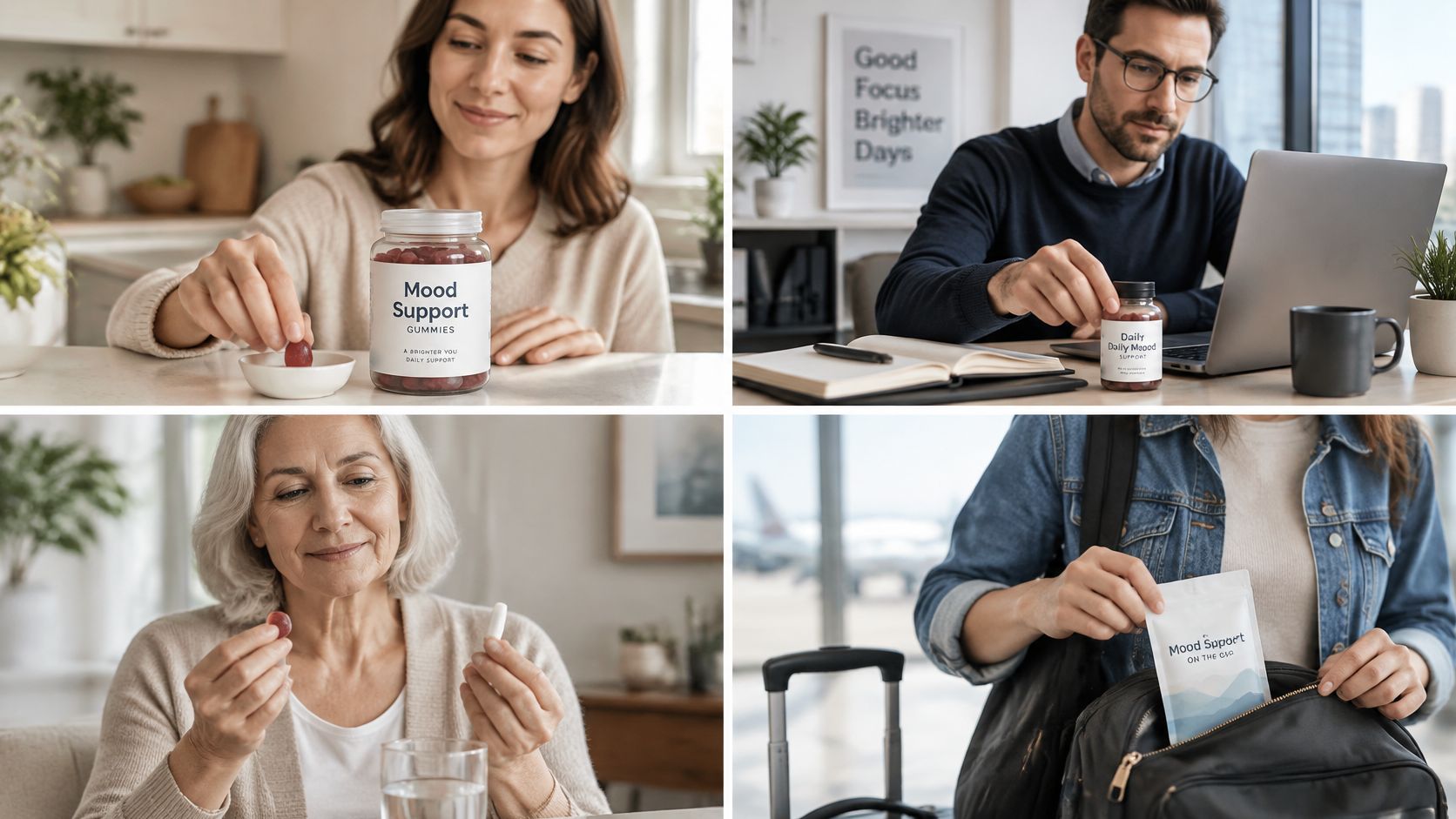
Another person may have a nutrient gap identified by a clinician, who recommends a particular vitamin or mineral. In that case, the supplement is intended to address a specific nutritional need; it isn't a universal mood booster. A useful measure of success is following the clinician's plan and checking whether the recommended product and serving fit the person's needs.
An adult already receiving mental-health care might ask their clinician about standardized saffron as a complement. The comparison point in trials is a standardized preparation near 30 mg per day for about six weeks, not any product that uses the word “saffron.” The boundary is clear: potential complementary support doesn't justify stopping prescribed care.
A woman drawn to language about confidence, connection, or feminine vitality may see those aims as part of self-care. They're legitimate personal goals, but they're not interchangeable with a trial result for depression, anxiety, or quality of life. A reasonable outcome might be finding a routine that feels personally meaningful, not claiming to treat a mental-health condition.
This video offers another perspective on mood and wellness. Treat any product claims as a prompt to check the ingredient list and intended use, not as proof of clinical benefit.
Before adding a product, check how it fits with medicines, pregnancy or breastfeeding, and other supplements. A pharmacist or clinician can help assess the exact ingredients and amounts rather than relying on a front-of-pack mood claim.
Safety Checks Before You Combine Products
Supplements can change how medicines are absorbed, metabolized, or excreted, sometimes with dangerous or life-threatening consequences. Risk can rise when people combine supplements, take high doses, or use supplements instead of or alongside medicines. “Botanical” doesn't mean automatically compatible.
The FDA's consumer guidance on medication interactions gives a reason to bring the exact product label to a pharmacist. St. John's wort, for example, can reduce the effectiveness of medicines used for heart disease, cancer, HIV, depression, seizures, and birth control.
| Checkpoint | Why it matters | Action |
|---|---|---|
| Antidepressants | Medicines can change how another product is absorbed, metabolized, or excreted | Ask a pharmacist to review the product before starting it |
| Hormonal contraception | St. John's wort can reduce birth control effectiveness | Confirm with your prescriber or pharmacist |
| Heart, cancer, HIV, or seizure medicines | St. John's wort can reduce their effectiveness | Have a clinician review the exact label and dose |
| Pregnancy or breastfeeding | Life stage changes risk and dosing questions | Consult a clinician first |
| Duplicate ingredients | Gummies, multivitamins, and fortified foods can stack intake | Review the combined amounts against each label |
When you speak with a pharmacist, mention all the relevant details, not only prescription pills:
- Medicines and life stage: Include antidepressants, hormonal contraception, thyroid or seizure medicines, anticoagulants, planned surgery, pregnancy, or breastfeeding.
- Other substances: Mention alcohol and high caffeine intake.
- Every source of nutrients: Bring labels for gummies, multivitamins, and fortified foods so the pharmacist can check for duplicate ingredients.
A gummy may be easier to include in a routine, but a convenient format doesn't make combined exposure easier to judge. Products marketed as high-potency or concentrated deserve the same careful review; this overview of high-potency gummies can help you focus on the amount per serving rather than the format alone.
Stop using a supplement and seek professional advice if you notice marked mood or behavioral changes. Suicidal thoughts require urgent professional care, not another supplement. If you're unsure whether a product is safe with your medicines, don't guess from the front label.
Choose Wellness Support or Clinical Care
If low mood is persistent or severe, disrupts work, sleep, or relationships, or includes suicidal thoughts, choose professional care rather than a supplement. A qualified healthcare professional can assess what's happening and discuss appropriate support. Don't use a wellness product as a reason to delay care.
For occasional stress relief, a self-care ritual, or interest in feminine vitality and confidence, a supplement may fit the wellness lane if its ingredients, dose, and interaction risks make sense for you. “Natural” doesn't answer whether the finished formula has evidence for the outcome you want. Supportive structure or function language also isn't a disease-treatment claim.
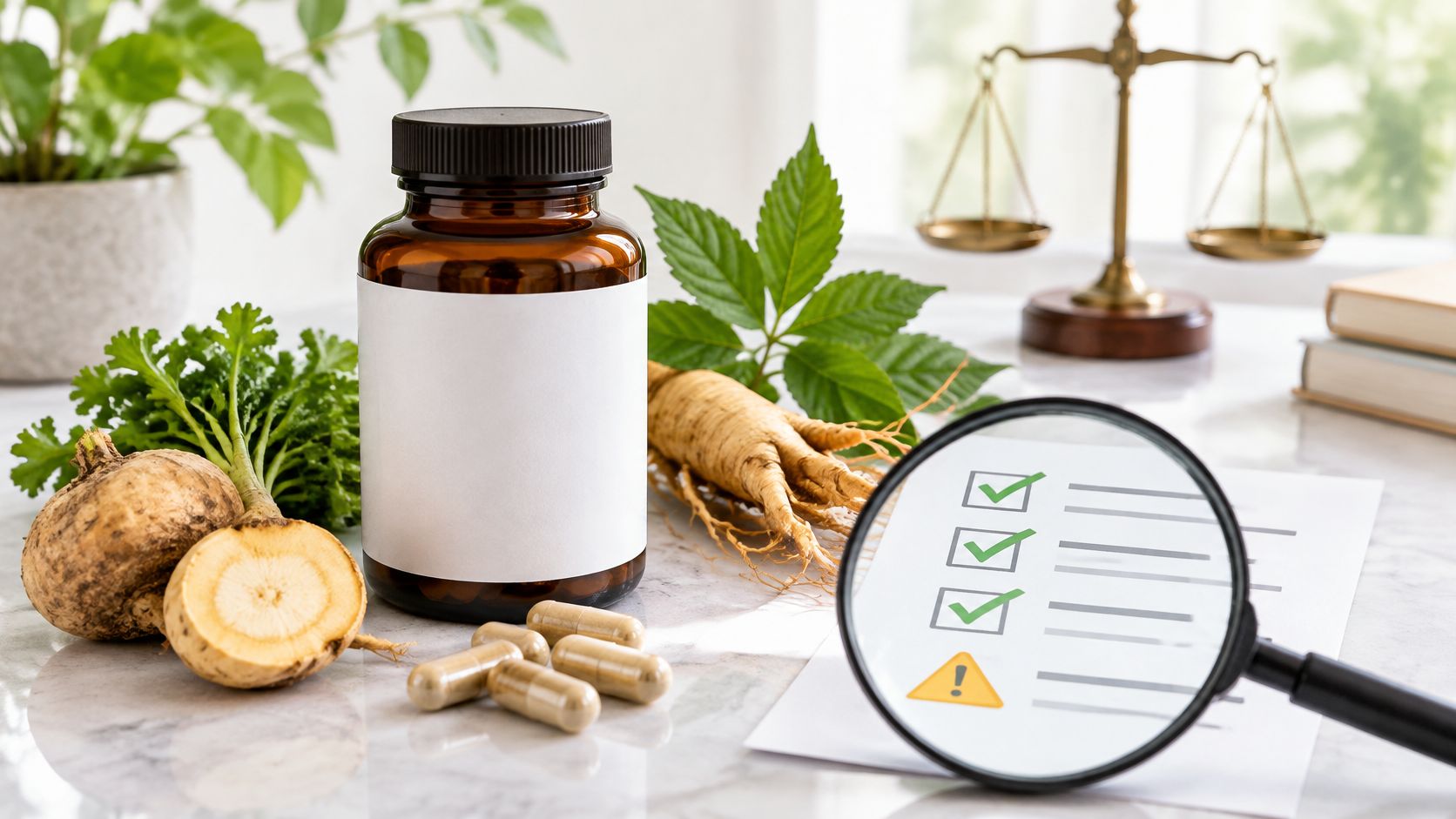
Eve's Eden's Femme Fresa Fatale is formulated with maca root, damiana, and ginseng as part of a modern sensual wellness ritual. It's for adults 18 and older; anyone who's pregnant, nursing, has a medical condition, or takes medication should consult a healthcare professional before use. The brand states that side effects are rare; if an adverse reaction occurs, stop using the product and consult a healthcare professional. Don't exceed the suggested serving, and keep it out of children's reach.
If you're considering a wellness gummy, read its label and ask a pharmacist or clinician to review it alongside your medicines when needed. Feeling better as part of a routine may matter to you, but it doesn't prove that a depressive disorder has been treated.
Eve's Eden offers women's sensual wellness supplements designed to fit into a self-care routine, including Femme Fresa Fatale gummies formulated with maca root, damiana, and ginseng. If that kind of wellness support fits your goals, visit Eve's Eden to explore the product, and consult a healthcare professional about whether it suits your health needs.