
How Many Gummy Vitamins Can You Take a Day? a Label Guide
How many gummy vitamins can you take a day? Read the label, check nutrient upper limits, and know when to ask a doctor.
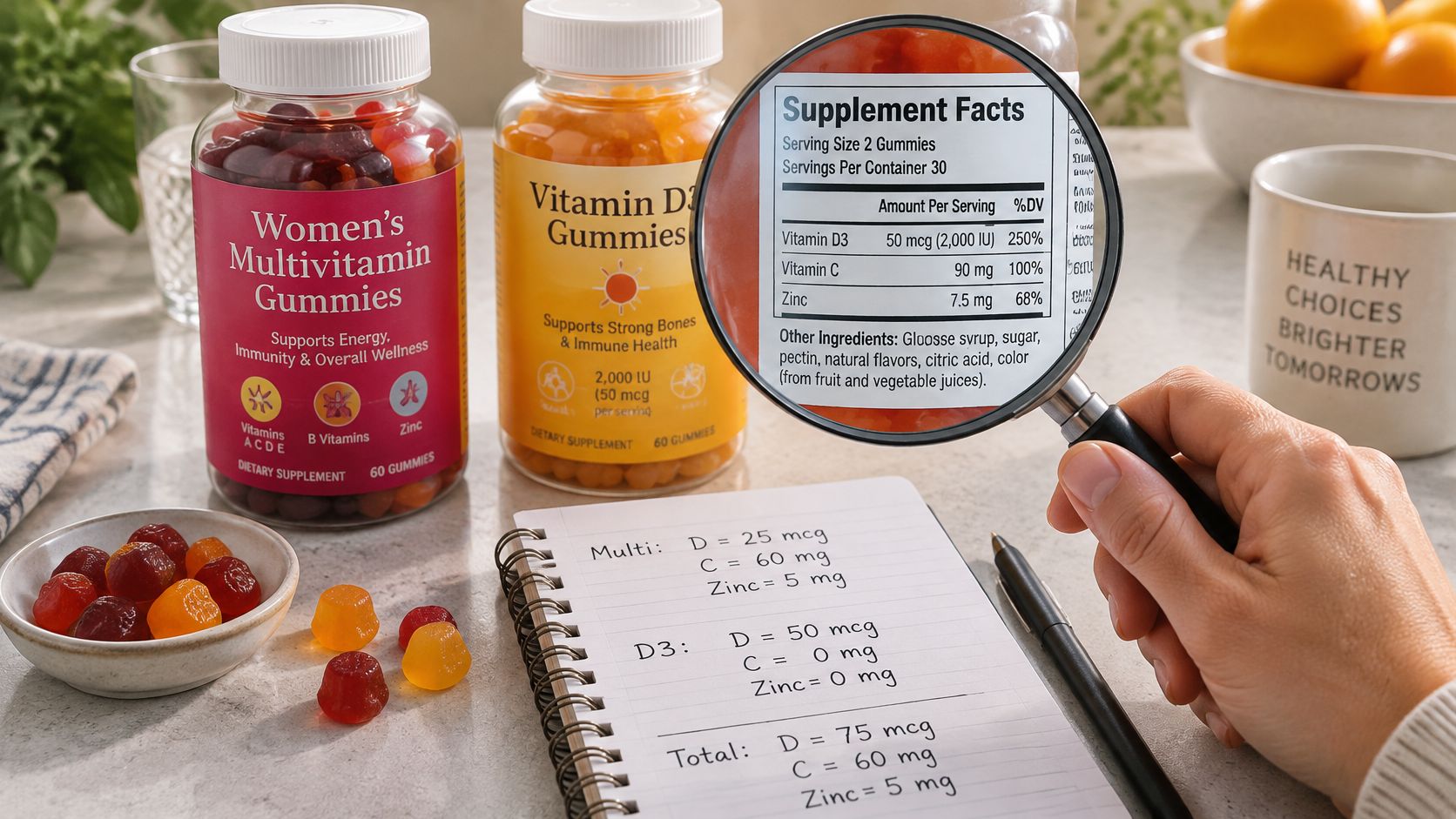
There's no universal number of gummy vitamins that every adult can safely take in a day, because each manufacturer sets the serving size for its own product. Your real answer lives on the Supplement Facts panel, not in a general rule about gummies.
Why do we keep asking for a count, as if one gummy from one bottle equals one gummy from another? That gap matters when you're deciding how many gummy vitamins can you take a day for the bottle in your hand. A repeatable routine works better: read the panel, total each nutrient across everything you take in one day, and compare that total with the adult upper limit.
Why No Single Gummy Count Works for Everyone
A gummy count is like a cookie count. It tells you almost nothing until you know how big each cookie is and what's inside it.
The manufacturer sets the serving
In the United States, a dietary supplement label must state the serving size, the servings per container, and the amount of each dietary ingredient per serving, according to the FDA dietary supplement labeling guide. Those rules don't impose one general legal limit on how many gummies make up a serving or how much of an ingredient a serving can contain. The manufacturer establishes the recommended serving.
That means two brands can both suggest two gummies and deliver very different doses. One might put most of its vitamin D in a single gummy, while another spreads a smaller amount across two. The count looks identical. Your intake isn't.
Counting what's in front of you is a starting point, not an answer.
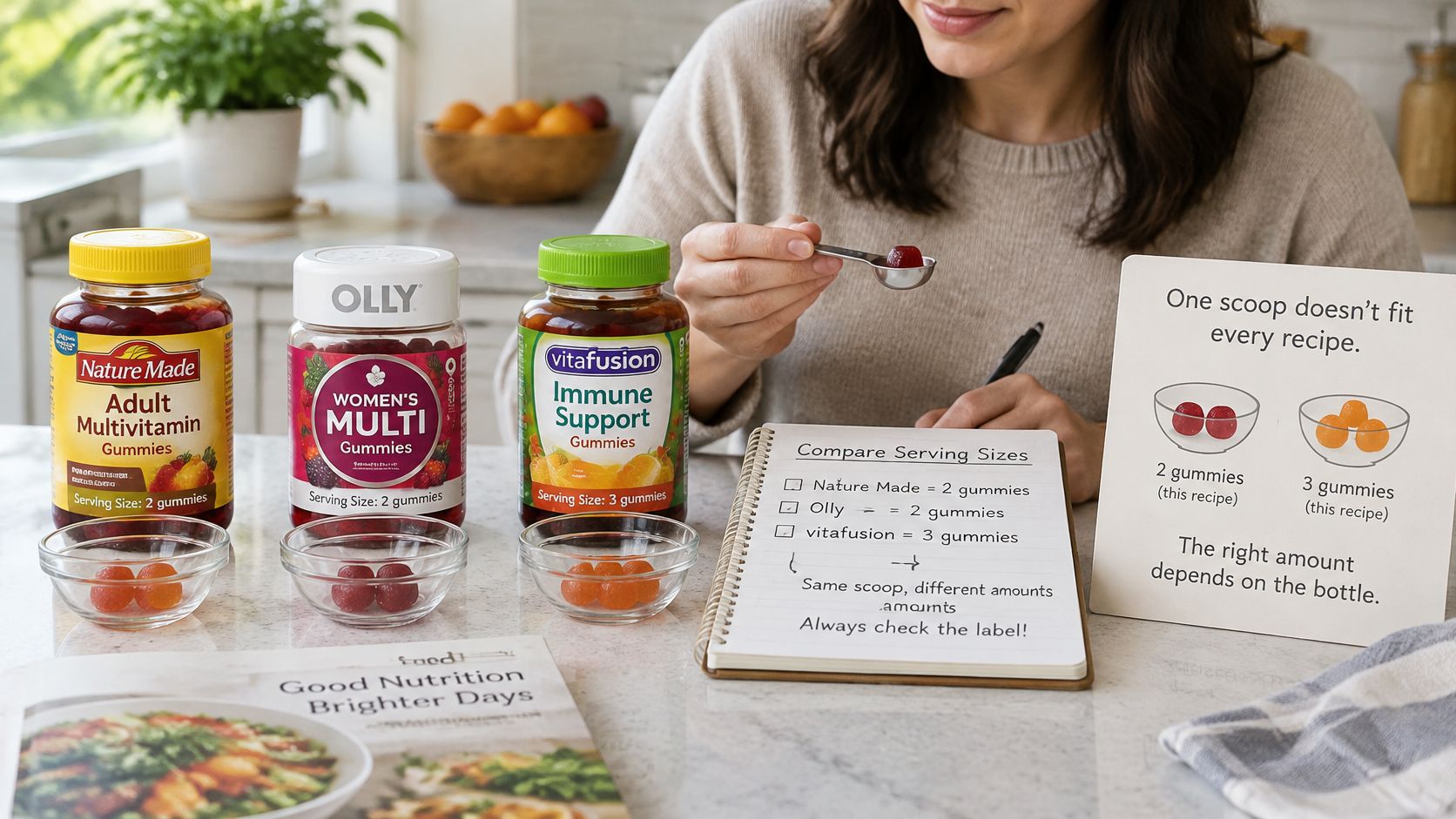
What a serving actually means
FDA guidance defines a supplement serving as the maximum amount recommended on the label for consumption on one occasion. If directions say take one to three, the serving size is three. Don't assume two or three gummies are safe for your product just because a different product recommends that amount.
Three things decide a sensible daily amount for you:
- The label's serving: How many gummies the manufacturer counts as one dose, and how often.
- Your total intake: What you also get from food, fortified products, and other supplements.
- Your circumstances: Pregnancy, medication, or a health condition can change what's appropriate.
Stop asking how many gummies in the abstract. Start asking what this label says and what else you're already consuming.
That shift turns a vague question into one you can answer with the bottle in front of you.
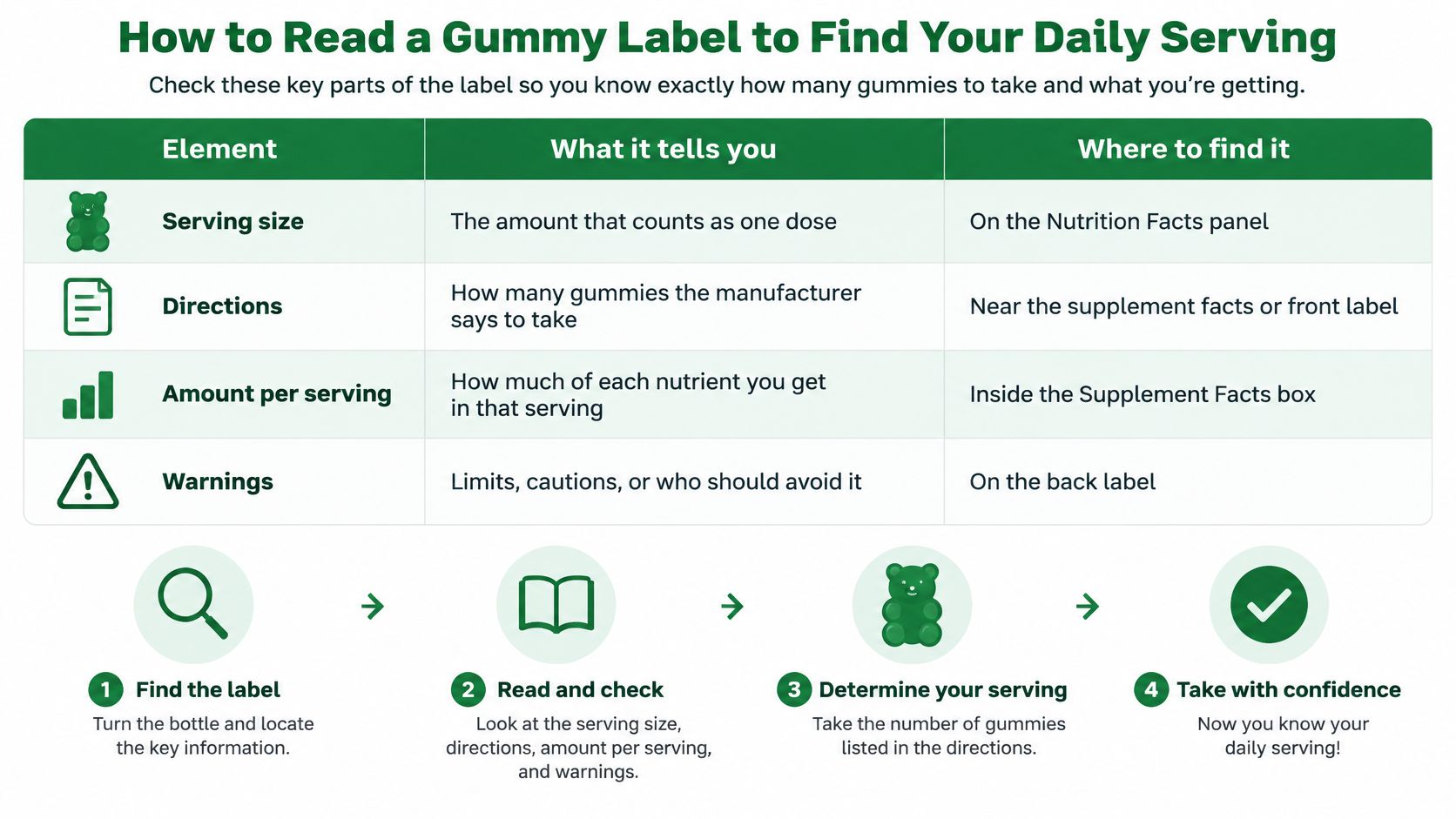
How to Read a Gummy Label to Find Your Daily Serving
Start by scanning the panel, not the front of the pack. Front claims are marketing. The Supplement Facts panel is where serving and dose are stated.
| Label element | What it tells you | Where to find it |
|---|---|---|
| Serving size | The amount that counts as one dose, often given in gummies | Top of the Supplement Facts panel |
| Servings per container | How many doses the bottle holds | Directly under serving size |
| Amount per serving and % Daily Value | The dose of each ingredient per dose | Main body of the panel |
| Directions | The maximum for one occasion and how often to take it | Usually on the back or side of the package |
| Proprietary blend | Total weight of a group of ingredients without individual amounts | Within the nutrient list, marked as a blend |
| Warnings and intended users | Who should not take the product or should consult a professional first | Often below the panel or on the back |
This visual walks through those elements in order.
A seven-step routine you can repeat
- Find the Supplement Facts panel. Ignore front-of-pack claims until you've read it, because claims don't state dose.
- Write down the serving size in gummies. That's one dose for this product, not a suggestion you can transfer to another brand.
- Read the directions. Confirm the maximum for one occasion and how many times a day the label allows it.
- Record each nutrient amount per serving. You'll need these numbers if you take more than one product.
- Flag any proprietary blend. A blend gives a combined weight, so you can't total individual ingredients from it.
- Note the % Daily Value. It reflects a general diet reference, not a safety ceiling, so 100% doesn't mean you can't exceed a safe total elsewhere.
- Check warnings and intended users. This tells you who shouldn't take it, or who should ask first.
If you're comparing products that market strength heavily, our guide to high-potency gummies can help you separate a label claim from the amount per serving. Potency language doesn't replace the panel.
The video below shows the same label-reading habit in practice, so you can pause and follow along with your own bottle.
Apply this to any wellness gummy, including ours. Femme Fresa Fatale gummies aren't intended to diagnose, treat, cure, or prevent any medical condition, and the product hasn't been evaluated or approved by the FDA. That statement is part of reading a label.
A daily number is only as reliable as the panel it came from. If the panel doesn't break an ingredient out, you can't calculate a precise total for it.
Nutrient Upper Limits That Stacking Can Break
A serving size and an upper limit aren't the same thing. A serving size is what one manufacturer tells you to take from one product. A tolerable upper intake level is the highest daily amount of a nutrient from all sources that's unlikely to cause harm for most adults.
How stacking happens quietly
Say you take a multivitamin gummy at breakfast, a separate vitamin D gummy because a friend recommended it, and you eat fortified cereal with milk. Each item looks reasonable alone. Added together, the vitamin D total may be much higher than you assumed.
Daily safety is governed by total intake from food, fortified products, and supplements, not by gummy count. The NIH vitamin D consumer fact sheet states that adults aged 19 and older have a tolerable upper intake level of 100 micrograms, or 4,000 international units, of vitamin D per day from all sources. The same source reports a 2,000-milligram daily upper limit for vitamin C for adults and a 100-milligram per day adult upper limit for vitamin B6.
| Nutrient | Adult upper limit (19+) | Where it often overlaps |
|---|---|---|
| Vitamin D | 100 mcg (4,000 IU) per day | Multivitamins, fortified milk and cereal |
| Vitamin C | 2,000 mg per day | Vitamin C gummies, multivitamins, fortified drinks |
| Vitamin B6 | 100 mg per day | Multivitamins, B-complex gummies, energy products |
| Vitamin A | 3,000 mcg RAE per day | Multivitamins, some eye and skin supplements |
| Niacin | Check the current NIH fact sheet before totaling | B-complex products, multivitamins |
| Folic acid | 1,000 mcg per day from supplements and fortified foods | Multivitamins, fortified grains |
| Iron | 45 mg per day | Iron-fortified multivitamins, fortified cereal |
| Zinc | 40 mg per day | Immune gummies, multivitamins, men's formulas |
| Selenium | 400 mcg per day | Multivitamins, antioxidant blends |
| Iodine | Check the current NIH fact sheet before totaling | Multivitamins, kelp-based products |
Some limits apply only to supplements and fortified foods, which is why the folic acid row is worded that way. For niacin and iodine, check the current NIH fact sheet for those two nutrients before you add them to a daily total, rather than guessing.
Use the table as a comparison, not a target
Add each nutrient across every product for one day, then compare the total with the limit. Don't aim for the limit. Staying at the labeled serving is your baseline, and the total tells you whether stacking has pushed you past it.
Excess isn't harmless just because it came from gummies. Very high vitamin B6 doses can cause severe nerve damage, and too much iron can be fatal. Multivitamins can also raise risk for excessive vitamin A, iron, zinc, niacin, or folic acid when combined with fortified foods or other supplements.
If you're unsure how a brand discloses amounts, read how transparency works before you combine products. Clear labeling makes the math possible.
Pregnancy and childhood involve different limits, so this adult table is a starting point, not a verdict for everyone in a household. When the same nutrient appears in two or three products, the total is the number that matters.
When a Gummy Count Becomes a Risk
Don't assume a small number of gummies is automatically low risk for a small child. That assumption fails most clearly with iron.
Iron and children change the calculation
Poison Control's guidance on multivitamins reports that iron-containing multivitamins can be extremely toxic in large doses, with early symptoms including abdominal pain, vomiting, and diarrhea. Severe exposure can cause gastrointestinal bleeding, shock, liver damage, and death.
The hazard depends on elemental iron dose and body weight, not the number swallowed. A modest count from an iron-fortified formula can still be dangerous for a child. Child-resistant packaging slows access, but it isn't childproof, so lock gummies away rather than relying on the cap.
Never use an adult gummy count to estimate a child's dose. We tell our customers the same basic rule: don't exceed the recommended dosage, and keep gummies out of reach of children.
If a child swallows gummies
- Don't wait for symptoms. Early action matters more than watching to see what happens.
- Call local poison control or emergency services. Do this immediately, even if the child seems fine.
- Have details ready. Give the product name, the Supplement Facts panel, the estimated number swallowed, the time, and the person's age and weight.
Adults face a quieter version of the same mistake. Don't double a daily serving to make up for a missed dose unless a healthcare professional advises it. A missed day isn't fixed by taking twice as much today.
Real Scenarios Where Daily Gummy Intake Goes Wrong
Copying a friend's count
Maya takes two gummies daily because her friend does. She assumes the dose matches. A label check shows her friend's product uses a different serving size and a higher amount of vitamin D per gummy, so copying the count gives Maya a different total than she expected.
A normal-looking morning stack
Jordan takes a multivitamin, a vitamin D gummy, and fortified cereal each morning. Each label looks ordinary on its own. When Jordan adds the vitamin D amounts together and compares the result with the adult limit, the daily total is higher than assumed.
These patterns are easier to spot when you see the assumption beside the label instruction.
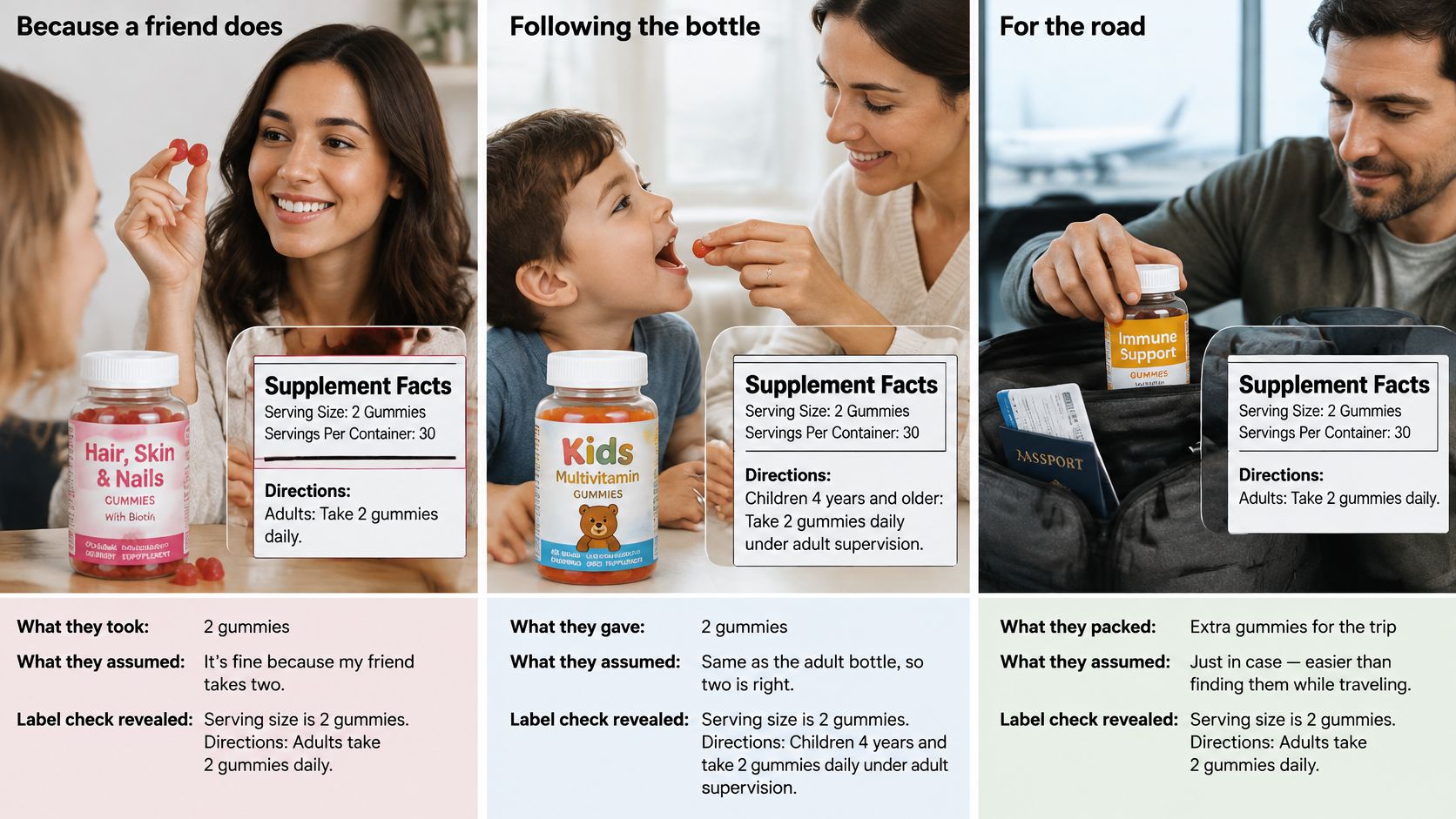
Taking extra after a rough night
Sam takes an extra gummy after poor sleep, assuming more is better. Sam never checks whether a prescription medication interacts with the extra ingredients. That's the missing step, because a count can't capture interaction risk.
The FDA questions and answers on dietary supplements notes that the manufacturer determines serving size and ingredient amounts, and FDA does not preapprove a supplement's serving size before marketing. That puts the label check on you.
For each scenario, the fix follows the same order: find the serving, total the nutrient, compare it with the upper limit, and call a professional when medication or a condition is involved. Track the daily nutrient total, not just the gummy count.
Who Needs Stricter Limits or Professional Advice
A labeled serving is written for the product's intended users. It may not fit you if your situation differs from that group.
- Pregnant or breastfeeding: Ask a professional before taking any gummy, because needs and limits differ from those for other adults.
- Children: Don't apply an adult count to a child, since safe amounts differ and body weight changes risk.
- Taking prescription medication: Check first, because ingredients can interact in ways a gummy count doesn't reveal.
- Managing a diagnosed condition: Get a clinician's review before starting or changing a product.
- Treating a suspected deficiency: Don't self-prescribe a higher dose, because testing and supervision may be needed.
- Considering more than the labeled serving: Ask even if your total looks below a limit, since the limit isn't the only safety factor.
Wellness gummies with botanicals need extra care for the same reason. A simple count doesn't show possible interactions, and a blend may not list each botanical amount separately.
Bring the panels with you: Take the Supplement Facts panel for every product, plus a written list of all supplements you use, so a professional can total your intake properly.
If you're reviewing options in this category, start with women's health products and read each panel before you decide. Treat this check as the decision point before any change in dose, not as an afterthought once you've already increased it.
Confirm Your Daily Limit Before Taking Another Gummy
Run this checklist before you take a gummy today. It takes a few minutes, and you only need to redo it when a product changes.
- Pull up every panel. Gather the Supplement Facts panel for each gummy and supplement you take.
- Confirm each serving. Write down the serving size and the label's daily maximum for each product.
- Add up each nutrient. Total it across all products for one full day.
- Compare with the upper limit. Use the adult limits table from earlier in this article for each total.
- Stop and ask when needed. If a situation from the previous section applies, or a total is close to a limit, contact a healthcare professional before taking more.
Our gummies are for adult use only (18+), and you should consult a healthcare professional before use, especially if you're pregnant, nursing, have a medical condition, or take medication. Side effects are rare, but if any adverse reaction occurs, discontinue use and consult a healthcare professional.
Marketing claims on the front of a package don't replace the panel on the back. Keep this checklist in your phone so it's ready at each purchase or refill, and update it whenever you swap a product.
When the label can't answer your question, ask a professional rather than take more.
If you're building a daily self-care routine and want a women's wellness gummy you can evaluate by its label, serving directions, and warnings before you buy, explore what we offer at Eve's Eden. Read the panel first, confirm the serving fits your total intake and circumstances, and ask a healthcare professional when you're unsure.