Happy Healthy Horny Herbs: 7 Botanicals for Mood and Desire
Discover happy healthy horny herbs, from ashwagandha to saffron. Learn what tradition says, what evidence supports, and how to use each one safely.
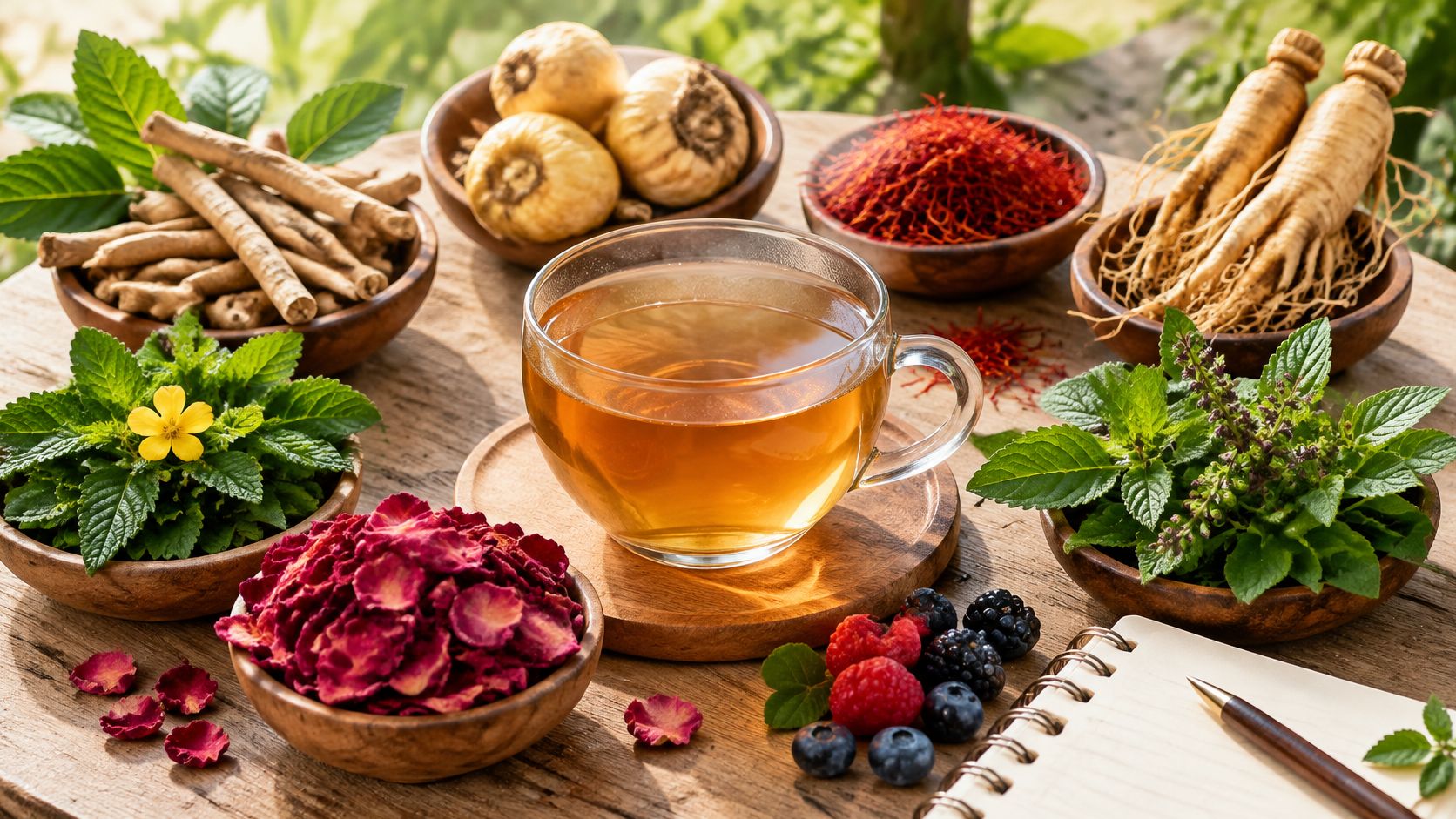
Can herbs really support mood, energy, and desire, or are we treating very different concerns as though they need the same supplement? Feeling exhausted, struggling to unwind, and wanting more sexual interest aren't interchangeable experiences. A useful botanical choice starts with identifying which experience you want to change.
The appeal of happy healthy horny herbs sits within a much broader tradition. The World Health Organization reports that 170 countries had formally acknowledged traditional and complementary medicine use by 2018, while emphasizing continuing gaps in evidence, safety monitoring, and quality control.
Each botanical below gets the same assessment: traditional purpose, clinical support, and practical use. Those are qualitative judgments, not numerical ratings. Where reliable evidence doesn't establish a dose range or treatment schedule, I won't invent one. A powder, tea, and concentrated extract aren't interchangeable, and a familiar herb name doesn't establish that a particular product works.
1. Ashwagandha (Withania somnifera)
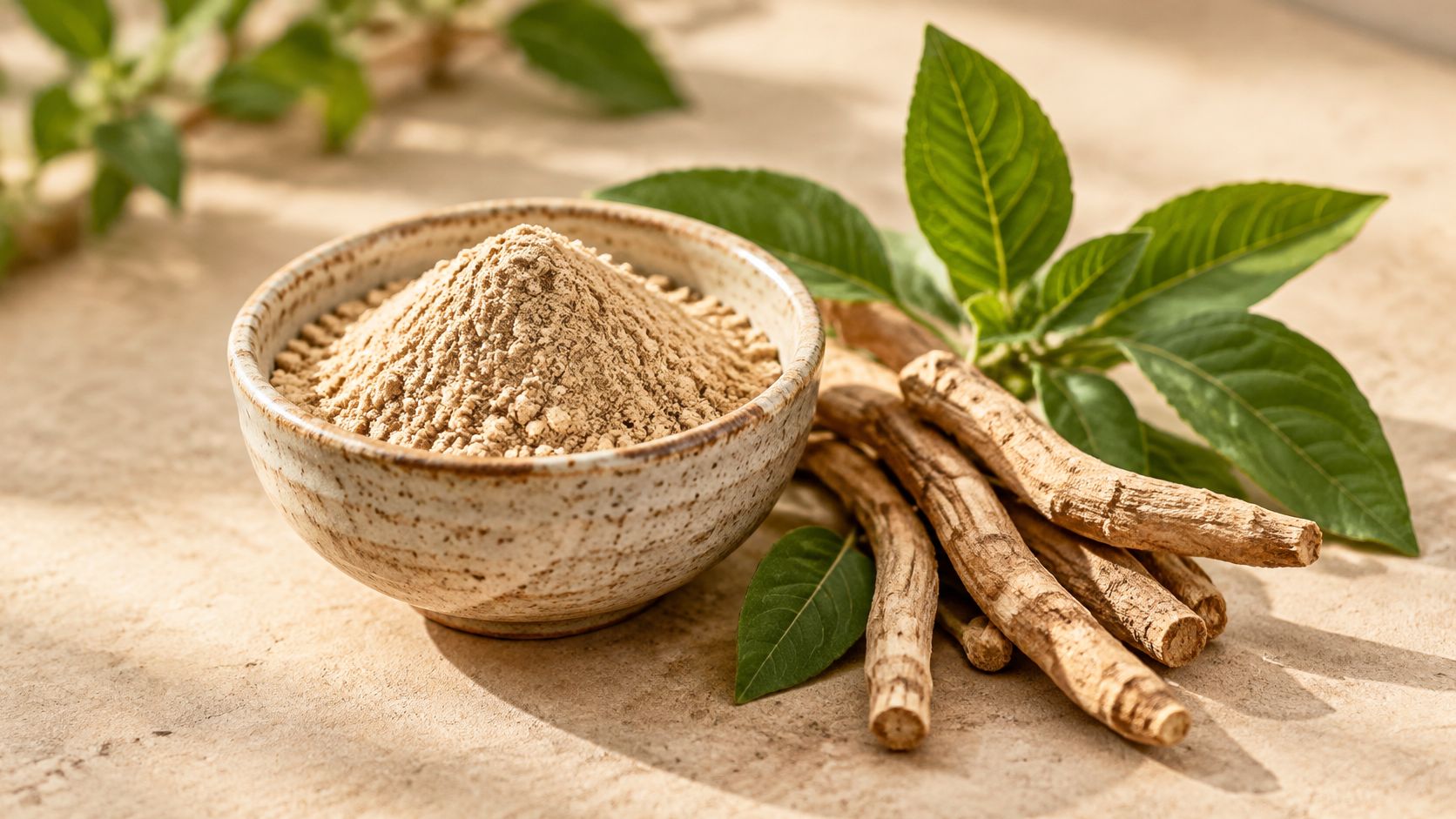
Ashwagandha makes more sense as a stress-oriented choice than as an on-demand aphrodisiac. Its Ayurvedic use centers on vitality and resilience, and it's commonly described as an adaptogen, a term used for herbs intended to support adaptation to stress.
Say you want intimacy but arrive at bedtime mentally preoccupied and depleted. That's a different starting point from persistent low desire without stress, pain, or exhaustion. Choosing a stress-focused supplement may fit the former goal, but it doesn't establish that the herb directly increases sexual desire.
Tradition versus evidence
Traditional fit is strong; direct sexual-wellness evidence remains preliminary. Small studies are grounds for further investigation, not permission to promise improved confidence, balanced hormones, or reliable sexual effects. A standardized extract also shouldn't be treated as equivalent to loose root powder.
- Form: Prefer a clearly identified extract that names the plant part and declares its withanolide standardization.
- Dose: No defensible universal dose range is established by the evidence available here. Match the exact preparation to clinician-reviewed evidence rather than borrowing a capsule dose for powder.
- Timing: Treat it as a planned, reassessed routine, not something expected to produce immediate arousal.
- Safety: Discuss thyroid conditions, sedating medicines, pregnancy, and breastfeeding before starting.
Our guide to choosing a de-stress supplement offers a useful starting point for separating your stress goal from broader wellness marketing.
Practical rule: An extract's total weight tells you less than its identity, concentration, and relevance to your actual goal.
2. Rhodiola Rosea (Golden Root)
If your main complaint is feeling mentally spent, rhodiola belongs in a different conversation from a calming bedtime herb. Its roots have a history of use in Scandinavian and Russian traditions for fatigue and stamina, which explains its presence in daytime energy formulas.
Traditional fit favors energy and resilience; direct evidence for women's desire isn't established here. Research interest in fatigue doesn't justify calling rhodiola a female aphrodisiac. Feeling more alert doesn't guarantee feeling more interested in sex.
A typical use case is someone whose interest in connection disappears after a demanding workday. Before adding a supplement, distinguish ordinary workload-related fatigue from persistent exhaustion that needs assessment.
Choose for daytime function, not a libido promise
Check the label for Rhodiola rosea rather than a generic golden root claim. If the manufacturer describes a standardized extract, it should declare its rosavin and salidroside content, the marker compounds used to characterize the root, instead of relying on the word adaptogen.
Standardized extracts are commonly taken in the 170–600 mg daily range listed in this article's at-a-glance table. Read that figure as a typical range reported for those extracts rather than a personal recommendation: after a medication review, follow the labeled serving of a clearly characterized product, and don't combine several stimulating formulas to chase a stronger effect.
Earlier-day dosing is the practical choice if rhodiola interferes with your sleep. Stop and get clinical advice if you develop agitation, racing thoughts, or unusual irritability. If you're weighing an energy-oriented product against a calming one, our guide to mood-support supplements can help you separate the two goals.
3. Saffron (Crocus sativus)
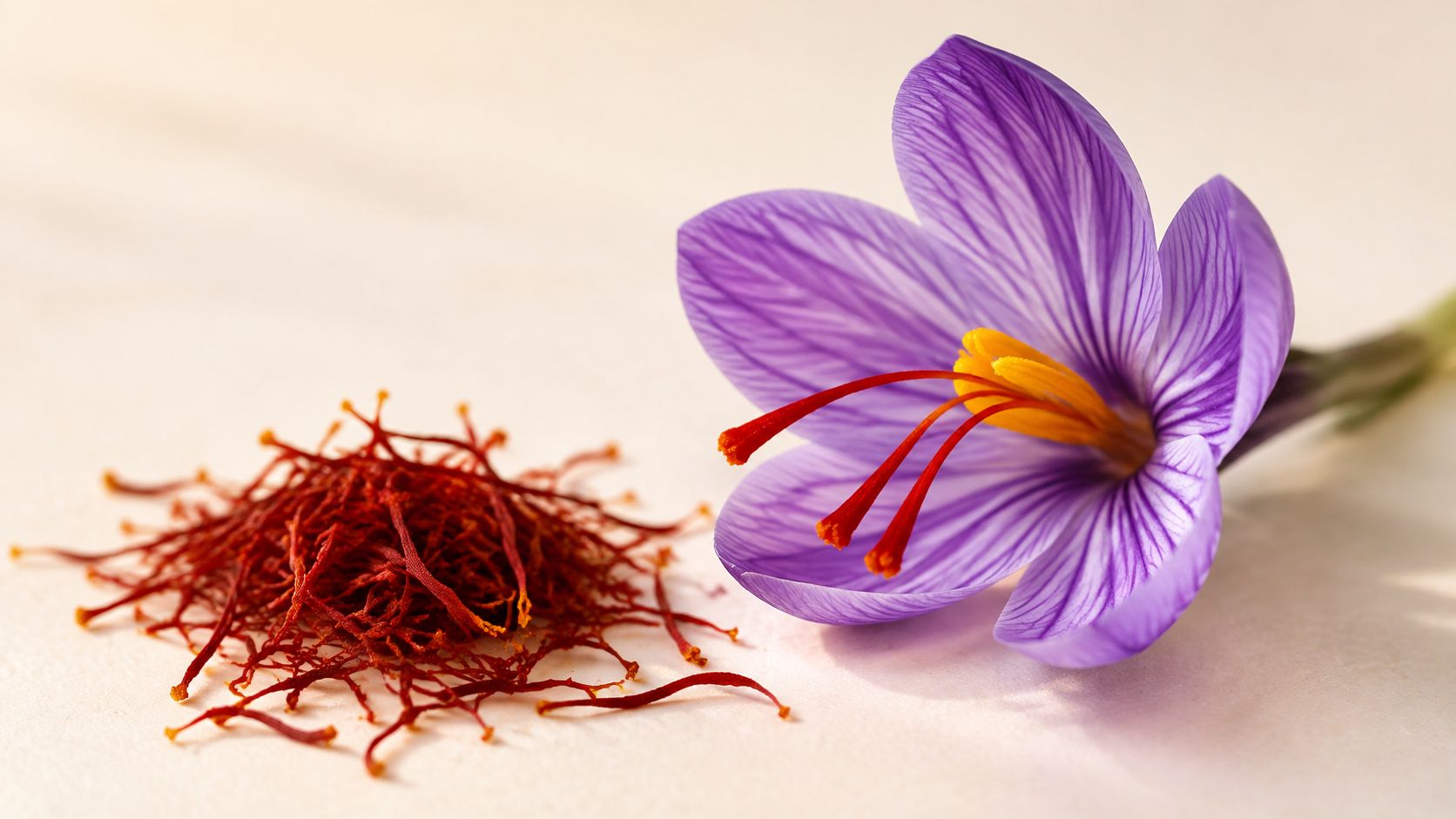
Saffron's association with romance makes appealing marketing, but culinary tradition and a clinically characterized extract are different things. Its traditional uses in Persian, Mediterranean, and South Asian settings include mood and vitality.
For someone whose low interest accompanies persistent low mood, the priority is understanding that mood change, not assuming a sensual-wellness blend will solve it. Don't stop an antidepressant or change its dose to make room for an herb.
Traditional fit includes mood and sensuality; the clinical verdict must remain preparation-specific. The evidence available here doesn't substantiate a particular saffron dose, a medication-equivalence claim, or a dependable improvement in antidepressant-related sexual symptoms.
Keep the kitchen and supplement cupboard separate
- Form: Choose an identifiable stigma extract with declared standardization and clear ingredient quantities. A named extract still needs evidence relevant to the intended outcome.
- Dose: Don't translate cooking quantities into a therapeutic dose or assume an unlabeled powder matches a studied preparation.
- Timing: Consistent use and an agreed reassessment point make more sense than treating saffron as a pre-intimacy stimulant.
- Safety: Have a pharmacist review concurrent medicines, particularly when the reason for taking it involves mood or medication-related symptoms.
A botanical can be worth investigating without being a substitute for mental-health care.
Persistent or severe depressive symptoms deserve clinical attention. A supplement label cannot tell you whether low mood, medication effects, relationship strain, or another health concern explains the change.
4. Maca (Lepidium meyenii)
Maca occupies an unusual position: it's both an Andean food and a supplement marketed for sexual vitality. That food history makes it approachable, but being edible doesn't establish a therapeutic effect on desire.
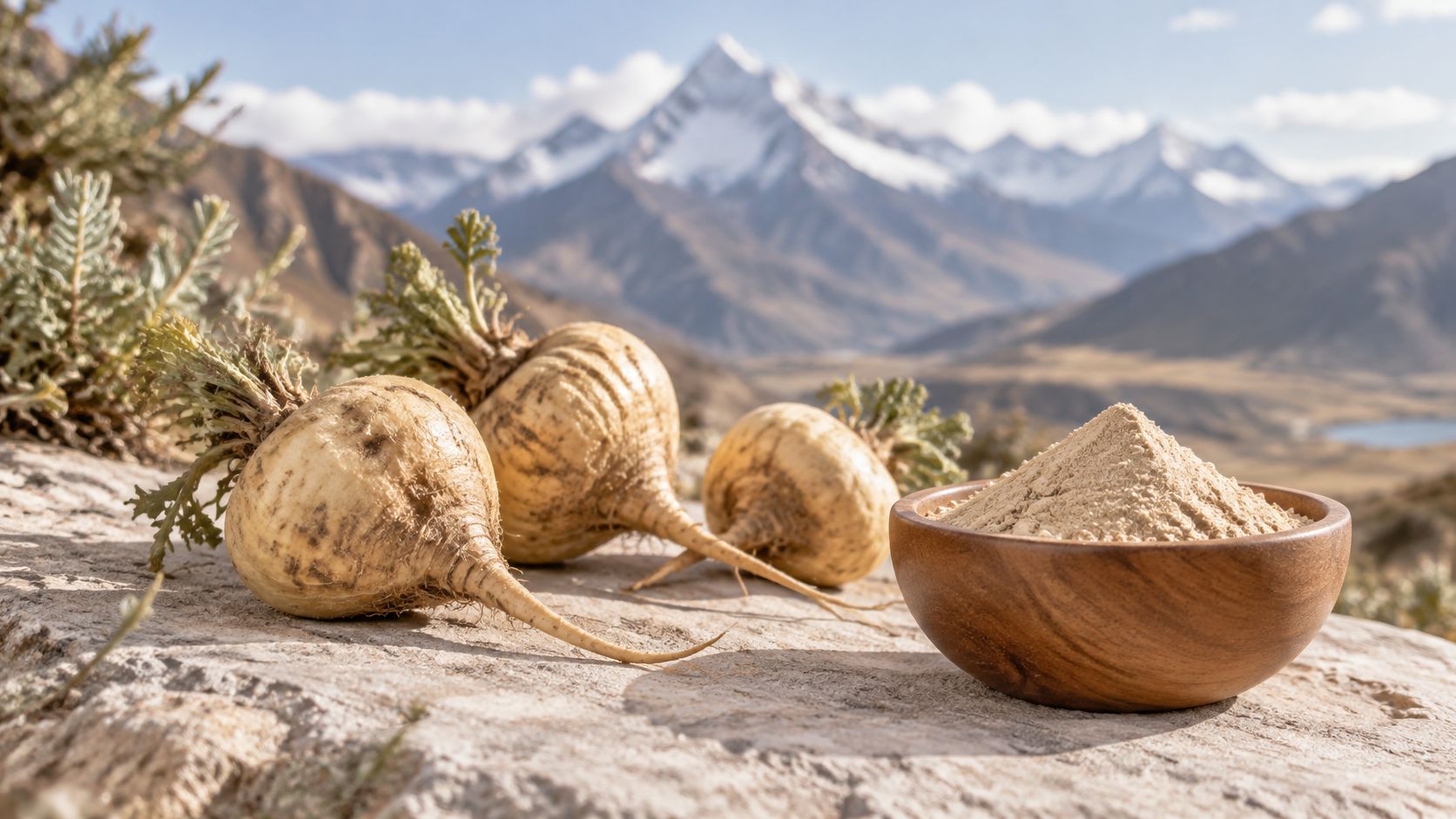
Traditional fit includes nourishment, energy, and sexual vitality; modern results are mixed. It's not reasonable to promise higher estrogen, increased testosterone, improved fertility, or correction of a hormonal imbalance because a product contains maca.
Say you prefer adding a botanical to breakfast rather than taking another capsule. Maca powder may suit that routine, but convenience and palatability are reasons for choosing a format, not proof of effectiveness.
Food form versus concentrated extract
A plain powder, gelatinized powder, and concentrated extract require different interpretations. Gelatinized maca has been processed; the term doesn't mean the product contains animal gelatin, although you should still read the full ingredient list.
For practical use, select a product that states the form and serving weight, and use its measuring instructions rather than an unmeasured kitchen scoop. No evidence-backed universal dose range or onset time can be supplied here. If you have digestive sensitivity, consider whether a processed powder is easier to tolerate rather than increasing the amount quickly.
Discuss thyroid concerns and existing treatment before use. Our guide to foods associated with women's libido places food choices within the broader picture of nourishment and intimate well-being, without treating any ingredient as a guaranteed aphrodisiac.
5. Korean Red Ginseng (Panax ginseng)
Ginseng has a more direct human-evidence signal for women's sexual function than tradition alone can provide. Korean red ginseng is steamed and dried Panax ginseng root, traditionally used for energy, stamina, and vitality.
A systematic review and meta-analysis of natural products for female sexual dysfunction identified 536 studies, of which only 20 met its inclusion criteria, and found improvements in arousal and desire with Panax ginseng. That supports cautious interest, but it doesn't establish that every red-ginseng preparation, blend, or gummy produces those outcomes.
Traditional fit is strong; clinical support is promising but formulation-dependent. Evidence about Panax ginseng shouldn't automatically be assigned to every product bearing the word ginseng.
Read beyond the common name
- Identity: Look for Panax ginseng, the plant part, and the preparation. Other products called ginseng aren't automatically substitutes.
- Concentration: Prefer declared ginsenoside content and an individual ingredient quantity.
- Dose and timing: The review summary doesn't establish a transferable dose range. Match the exact extract to its supporting trial and consider morning use if it disrupts sleep.
- Interactions: Ask a pharmacist to review blood thinners, diabetes medicines, and the rest of your supplement routine.
A reasonable use case is a woman exploring support for arousal who understands that improved questionnaire scores aren't a promise of a particular experience. Pain, persistent dryness, or distress still deserves assessment rather than a stronger supplement.
6. Damiana (Turnera diffusa)
Damiana is the clearest example of why traditional reputation and clinical confidence need separate ratings. Its leaves have been used in Mexican and Central American herbal traditions for mood, stamina, and sexual vitality.
Traditional fit is established; convincing human evidence for female desire remains limited. Laboratory findings and an aphrodisiac reputation can justify investigation, but neither tells you whether a particular tea or capsule will improve your experience.
For someone who enjoys an evening herbal ritual, damiana may appeal as a traditional preparation. That's different from choosing it to treat ongoing sexual dysfunction, and the distinction should remain clear.
Don't let the blend hide the ingredient
Choose a product that identifies Turnera diffusa leaf and states its amount. A proprietary blend total doesn't tell you how much damiana you're taking, and there's no substantiated dose range or reliable onset time available here.
The larger safety concern is that sexual-enhancement marketing doesn't guarantee honest contents. The FDA's warning about Primal Herbs Volume identified undeclared sildenafil and warned about dangerous blood-pressure lowering with nitrate medicines; this was a product-adulteration finding, not evidence that damiana itself contains sildenafil.
Buying advice: Reject guaranteed instant-effect claims, and prioritize complete labeling and independent quality verification over aphrodisiac language.
If you use glucose-lowering medicines or other botanicals affecting blood sugar, have the full combination reviewed. Don't assume a tea is interaction-free because it feels less medicinal than a capsule.
7. Passionflower (Passiflora incarnata)
The word passionflower can suggest a sexual stimulant. Its traditional role is almost the opposite: calming nervous tension and supporting rest, rather than directly producing desire.
Traditional fit favors relaxation; direct libido support isn't established here. Someone who feels too keyed up to settle into an evening with a partner might consider a calming routine, but sedation isn't the same as comfort, connection, or arousal.
A practical example is replacing a complicated evening supplement stack with a clearly identified preparation after medication review. The aim would be relaxation, with sexual well-being treated as a separate outcome rather than an assumed benefit.
A calming herb still needs safety checks
- Form: Look for Passiflora incarnata and identification of the aerial parts. Don't substitute an ornamental passionflower plant.
- Dose: No validated dose range is established by the evidence available here. Tea strength, tincture concentration, and extract weight aren't interchangeable.
- Timing: If it causes drowsiness, reserve it for an evening when you don't need to drive or remain alert.
- Combinations: Avoid alcohol and have sedatives, antidepressants, and other calming supplements reviewed before combining them.
The National Center for Complementary and Integrative Health cautions that supplements can interact with medicines, labels may not match actual contents, and pregnancy, breastfeeding, chronic illness, and planned surgery warrant particular care. Those precautions apply even when your goal is a gentler bedtime routine.
7 Herbs for Mood, Vitality, and Sensual Wellness at a Glance
Read this table as a screening tool rather than a dosing chart. Every row applies the same lens: what the herb was traditionally used for, what human trials support, what to verify on a label, and the precaution most likely to matter. The dose column is deliberately absent. No defensible universal dose range is established for these botanicals, and a milligram figure without a named species, plant part, and extract form would be an invented number.
| Item | Traditional Use | Evidence Strength | What to Check on the Label | Key Safety Note |
|---|---|---|---|---|
| Ashwagandha (Withania somnifera) | Ayurvedic use for stress, vitality, and resilience | Moderate for stress; limited for sexual function | Confirm Withania somnifera root extract and the declared amount per serving. No evidence-based dose range established | Avoid during pregnancy; may affect thyroid and interact with some medicines |
| Rhodiola Rosea (Golden Root) | Used in Scandinavian and Russian traditions for fatigue, low mood, and stamina | Limited; small studies suggest benefits for fatigue and mood | Confirm Rhodiola rosea and what the extract is standardized to. No evidence-based dose range established | Avoid with bipolar disorder; review medication interactions |
| Saffron (Crocus sativus) | Used for mood, digestion, vitality, and sensuality | Moderate for mild to moderate depressive symptoms; studies are often short term | Confirm Crocus sativus extract and the declared amount per serving. No evidence-based dose range established | Avoid very high doses; high-dose use is not recommended during pregnancy |
| Maca (Lepidium meyenii) | Andean food and traditional use for energy, fertility, and sexual vitality | Limited and inconsistent for sexual or mood benefits | Confirm Lepidium meyenii powder and the declared amount per serving. No evidence-based dose range established | Use caution with thyroid disease or hormone-sensitive conditions |
| Korean Red Ginseng (Panax ginseng) | Korean and Chinese traditional use for energy, stamina, and sexual vitality | Moderate for fatigue and sexual function | Confirm Panax ginseng root or extract and the declared amount per serving. No evidence-based dose range established | May interact with blood thinners and diabetes medicines |
| Damiana (Turnera diffusa) | Traditional use for mood, stamina, and sexual vitality | Very limited human evidence | Confirm Turnera diffusa, the plant part used, and the declared amount per serving. No evidence-based dose range established | May lower blood sugar; avoid during pregnancy |
| Passionflower (Passiflora incarnata) | Traditional use for anxiety, sleep, and nervous tension | Limited; small studies suggest possible anxiety and sleep benefits | Confirm Passiflora incarnata extract and the declared amount per serving. No evidence-based dose range established | May cause drowsiness and interact with sedatives or alcohol |
A "moderate" rating here means some human evidence exists, often from small or short trials. It is not a settled answer, and I would treat every row above as provisional.
Building Your Own Sensual Wellness Ritual
Choose the goal before choosing the herb. Stress, fatigue, low mood, diminished desire, arousal difficulties, and discomfort require different decisions. Start by identifying the concern that matters most, then consider whether a supplement is appropriate at all.
Before taking anything, bring the complete label to a pharmacist or clinician. Include prescription medicines, hormonal contraception, over-the-counter products, and other supplements, especially if you're pregnant, nursing, managing a medical condition, or preparing for surgery.
Make the experiment interpretable
- Choose a defined preparation: Record the species, plant part, extract standardization, and serving amount.
- Avoid stacking new products: Otherwise, you won't know which change helped or caused an unwanted effect.
- Track distinct outcomes: Note desire, arousal, comfort, orgasm, mood, sleep, and distress separately.
- Agree on reassessment: Use a preparation-specific review point, not an indefinite commitment or universal waiting period.
There's no sound basis for prescribing the same trial duration to every herb. A systematic review of Tribulus terrestris reported improvements after one to three months, but rated the evidence certainty very low; that schedule cannot be transferred to these other botanicals.
For a combined format, our Femme Fresa Fatale gummies pair Maca Root, Damiana, and Ginseng, with 200 mg of botanical ingredients per gummy. They're strawberry-flavored, vegan, gluten-free, and made in a GMP-certified facility, for adults 18+; our suggested use is about 45 minutes before you want to feel your best, which isn't a clinically established onset guarantee.
A pleasant ritual can support self-care without becoming a test you must pass. Seek care for persistent pain, sudden changes, or distress rather than escalating doses or adding more herbs.
We offer sensual wellness supplements designed to support confidence, connection, and feminine vitality. Visit Eve's Eden to explore our botanical gummy format or find wellness-store availability, and bring the ingredient label to your clinician before adding it to your routine.